Short Answer
Welded wire mesh is a type of livestock fencing made from rigid horizontal and vertical wires welded at each intersection. It is commonly used to contain livestock, protect young animals, and block predators due to its uniform spacing, strength, and visibility. Farmers often choose it for pens, perimeter fencing, and areas requiring precise control.
Why This Question Matters
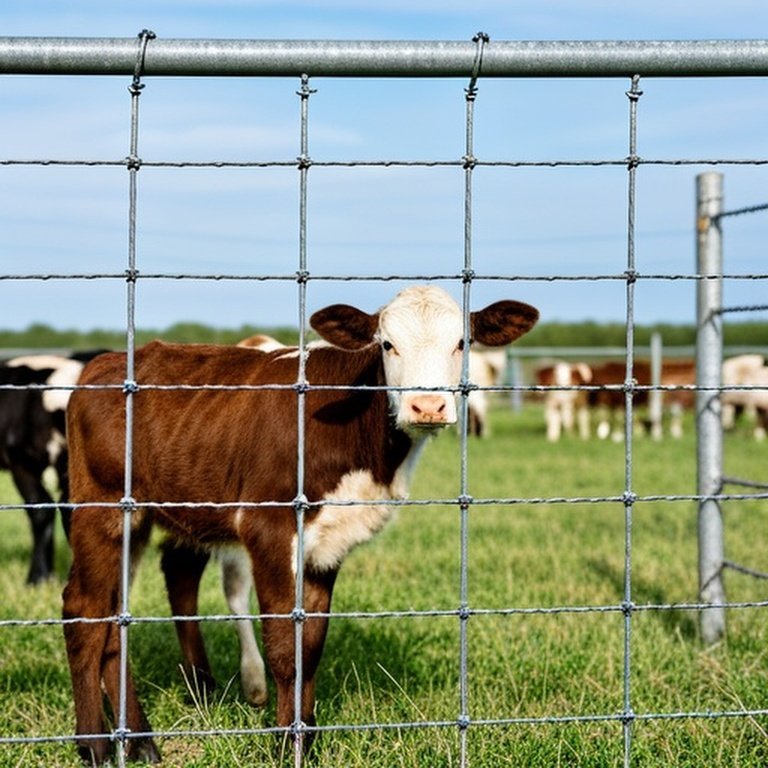
Choosing the wrong fencing material can lead to escaped animals, injuries, predator losses, and higher long-term costs. Welded wire mesh is often recommended, but many livestock owners don’t fully understand what it is—or where it actually performs well. This question matters because welded wire mesh behaves very differently from woven wire, high-tensile, or electric fencing. Its rigidity, spacing, and installation requirements make it ideal in some scenarios and risky in others. Understanding how and why it’s used allows livestock owners to make decisions based on behavior, pressure points, and management style rather than marketing claims.
Key Factors to Consider
- Wire gauge and weld quality directly affect strength, longevity, and resistance to animal pressure
- Opening size determines suitability for different livestock sizes and predator exclusion
- Fence height and post spacing influence overall rigidity and long-term performance
- Installation method impacts durability more than material choice alone
- Intended use (perimeter, pens, interior fencing) changes whether welded mesh is appropriate
Detailed Explanation
Welded wire mesh is constructed by electrically welding steel wires together at fixed intervals, creating a rigid grid. Unlike woven wire, the wires do not flex or move independently. This rigidity gives welded mesh a clean appearance and consistent spacing, which helps prevent animals from pushing heads or legs through uneven openings. For livestock fencing, this predictability is often its biggest advantage.
In practice, welded wire mesh is commonly used for small to medium livestock containment, especially where visibility and boundary clarity matter. Animals can clearly see the fence, reducing accidental pressure and panic-related collisions. This makes it useful in pens, feeding areas, and controlled pasture sections where livestock interact closely with fencing.
However, welded wire mesh relies heavily on proper installation. Because the fence itself has limited flexibility, force is transferred directly to posts and weld points. Adequate post spacing, strong corner bracing, and correct tensioning are essential. When installed poorly, welded mesh can bend, pop welds, or sag—issues that are less forgiving than with woven wire.
Another defining characteristic is spacing uniformity. Welded wire mesh is manufactured with fixed openings, which can be selected to suit different needs. Smaller openings are effective for keeping young animals in and predators out, while larger openings reduce material cost but limit suitability. This makes welded mesh less “one-size-fits-all” than other fencing types.
By the end of this section, the core conclusion should be clear: welded wire mesh is not simply “strong wire.” It is a rigid containment system that works best when animal behavior, pressure levels, and installation quality are well controlled.
How Livestock Behavior Affects This Choice
Livestock behavior plays a critical role in how welded wire mesh performs over time. Animals that test boundaries by leaning, rubbing, or pushing repeatedly place concentrated pressure on fixed weld points. Calm livestock with clear visual boundaries tend to respect welded mesh fencing, while highly curious or dominant animals may challenge it.
Because welded wire mesh does not flex like woven wire, behavioral pressure does not dissipate. Instead, it accumulates at contact points. This means fencing that works well for managed herds may fail under continuous stress from overcrowding, feed competition, or poor pasture rotation. Understanding daily movement patterns and pressure zones helps determine whether welded mesh is a stable long-term solution or a maintenance risk.
Young Animals vs Mature Livestock
Welded wire mesh is often favored for containing young animals because of its consistent opening size. Calves, lambs, and kids are less likely to get heads or legs trapped compared to uneven fencing materials. This improves safety during early growth stages when animals are most vulnerable.
Mature livestock, however, generate significantly more force. Their weight, strength, and dominance behaviors can overwhelm light-gauge welded mesh if it is not properly reinforced. While welded wire can still be used for adults, it typically requires heavier gauge wire, closer post spacing, and well-anchored corners to remain reliable over time.
Terrain, Visibility, and Pressure Zones
Terrain directly influences welded wire mesh performance. Flat or gently sloped ground allows even tension and consistent post alignment, which helps preserve weld integrity. Uneven terrain creates stress points where rigidity becomes a disadvantage rather than a strength.
Visibility is another key factor. Welded wire mesh is easy for animals to see, reducing accidental impacts. This makes it especially useful near gates, handling areas, and high-traffic zones. However, pressure zones such as corners, water access points, and feeding areas still require reinforcement regardless of fence material.
When This Works Well
- Containing young or small livestock with consistent size and calm behavior
- Pens, corrals, and controlled interior fencing with predictable movement
- Areas requiring high visibility to reduce accidental collisions
- Predator exclusion zones using small opening mesh
- Farms prioritizing clean layout and clear boundaries
When This Is Not Recommended
- High-pressure perimeter fencing with large, aggressive livestock
- Poorly braced corners or widely spaced posts
- Steep, uneven, or rocky terrain without proper adjustments
- Situations requiring flexibility under constant force
- Low-maintenance systems where repairs are difficult
Alternatives or Better Options
Woven wire fencing offers greater flexibility and pressure distribution, making it better suited for large livestock and long perimeter runs. High-tensile wire systems provide durability with lower material costs when properly tensioned. Electric fencing excels for behavior control and rotational grazing but requires active power management. Each alternative addresses limitations inherent in welded wire mesh, particularly in high-stress or large-scale environments.
Cost, Safety, and Practical Notes
Welded wire mesh typically costs more per foot than basic wire fencing but less than premium specialty systems. Installation quality heavily influences its lifespan, making labor a significant factor. From a safety standpoint, uniform openings reduce entanglement risks for young animals, but damaged welds can create sharp edges if neglected. Long-term practicality depends on access to repairs, post strength, and whether the fence is placed in high-pressure zones.
Quick Takeaway
Welded wire mesh is a precise, rigid fencing solution that performs best in controlled environments with proper installation and predictable livestock behavior. It is not universally superior—but when used in the right context, it delivers safety, visibility, and reliable containment.