Short Answer
The best fence for horse pastures is a highly visible, smooth fencing system that discourages contact rather than relying on physical strength. In most pasture settings, this means wood or vinyl fencing combined with electric offsets, or well-designed electric fencing used as a primary psychological barrier. These options minimize injury risk while remaining effective over large areas.
Why This Question Matters
Pasture fencing faces different demands than small paddocks or riding arenas. Horses spend long hours grazing, moving in groups, and interacting with fence lines daily. Many owners choose fencing based on cost or tradition, assuming that “strong enough” equals “safe enough.” In pasture environments, that assumption often leads to leaning damage, fence failure, or injuries that go unnoticed until they become serious. This question usually arises when setting up new land, expanding grazing areas, or replacing fences that fail under constant, low-level pressure rather than sudden impact.
Key Factors to Consider
Fence visibility across long distances and changing light conditions is critical. Horse behavior during grazing, movement, and social interaction must be accounted for. Fence response to constant leaning and pressure over time determines longevity. Pasture size affects the feasibility of regular inspection. Long-term maintenance demands must be balanced against initial installation costs.
Detailed Explanation
Horse pastures require fencing that works continuously, not occasionally. Unlike confinement areas, pastures expose fence lines to constant interaction. Horses graze along boundaries, shift positions with herd movement, and test weak points gradually. For this reason, the best pasture fencing systems focus on deterrence and clarity, not brute force.
Wood and vinyl fencing perform well in pastures because they provide strong visual boundaries. Horses recognize the fence line early and adjust their movement before contact occurs. When paired with electric offsets, these systems dramatically reduce leaning and chewing, extending fence life while lowering injury risk. The electric component prevents pressure from ever building, which is critical over long fence runs.
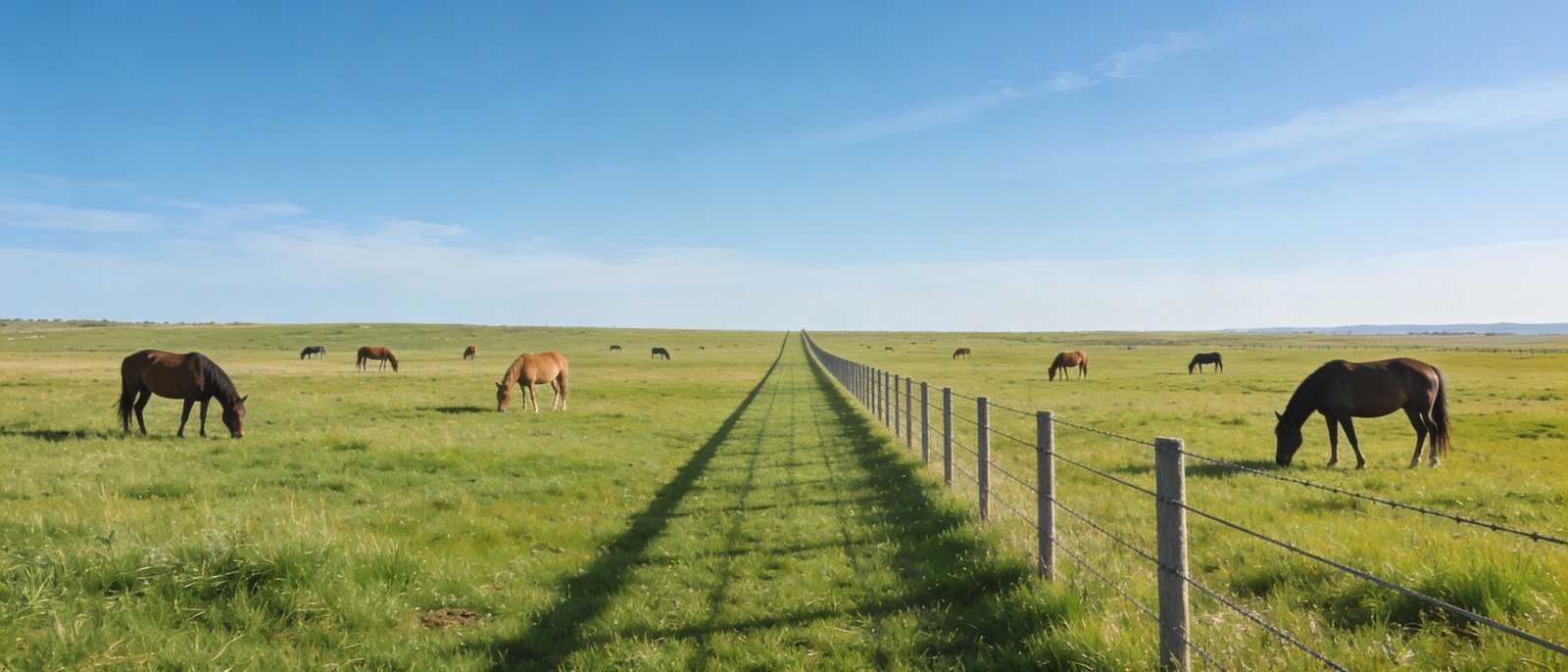
Electric fencing alone can also work in pasture settings when visibility and power are properly managed. Wide tape or rope systems create a strong visual signal that horses respect quickly. Because horses learn to avoid contact, the fence experiences minimal wear. Problems arise only when electric fencing is underpowered, poorly grounded, or difficult to see against grass and terrain.
Rigid wire systems perform poorly in pastures because they invite constant physical contact. Over time, horses deform the fence, create sagging sections, and expose sharp edges. Pasture fencing must tolerate daily interaction without escalating risk. Systems that discourage approach rather than resist force consistently perform best in open grazing environments.
Pasture Size and Fence System Choice
As pasture size increases, fencing efficiency matters more than absolute strength. Large pastures make frequent inspection harder, so fencing systems must remain safe even when minor issues go unnoticed. This favors designs that prevent contact rather than punish mistakes.
Electric fencing scales especially well across large areas because it reduces physical stress on posts and materials. When horses respect the boundary, the fence remains effective with minimal intervention. In contrast, physical-only systems degrade gradually and often fail without warning, particularly in remote sections of pasture.
Visibility and Pressure Zones in Open Grazing
Pasture fencing is rarely uniform. Corners, gates, water sources, and shared fence lines experience higher pressure than straight runs. Visibility plays a critical role in these zones. Horses approaching at an angle or following herd movement need to recognize the boundary early.
Highly visible rails, tape, or offsets reduce sudden contact and panic reactions. In open pastures, visibility often matters more than material strength. Effective pasture fencing creates a boundary horses avoid instinctively rather than one they discover physically.
When This Works Well
Large or medium-sized pastures with group turnout benefit from highly visible fencing systems. Horses accustomed to visible boundaries respond well to electric-assisted fencing. Fence lines with consistent layout and good sightlines allow horses to recognize boundaries early. Systems designed to discourage leaning and chewing minimize maintenance needs. Operations performing periodic but not daily inspections find these systems reliable and durable.
When This Is Not Recommended
Small confinement areas with frequent close contact require different fencing approaches. Pastures used for highly reactive or untrained horses may need more robust physical barriers initially. Locations with unreliable power for electric fencing cannot maintain consistent deterrence. Areas with poor visibility due to vegetation or terrain reduce the effectiveness of any fencing system. Temporary setups without reinforcement at pressure points often fail prematurely.
Alternatives or Better Options
In high-pressure pasture areas, combining physical fencing with electric offsets often outperforms either system alone. The physical fence provides structure and visibility, while the electric line prevents contact and long-term wear.
For rotational grazing, temporary electric tape systems may be a better option than permanent fencing. These systems offer flexibility and visibility while keeping installation and removal simple. Alternatives exist to match pasture use patterns rather than forcing a single solution everywhere.
Cost, Safety, and Practical Notes
Pasture fencing costs are driven more by length and maintenance than by material choice alone. Systems that reduce physical contact often cost less over time, even if initial installation is higher. Electric-assisted systems lower repair frequency and reduce injury-related expenses.
From a safety perspective, pasture fencing should assume horses will interact with it daily. Designs that tolerate mistakes and discourage pressure perform best. The practical goal is not maximum containment force, but minimum contact over maximum distance. Most pasture operations achieve this with visible fencing supported by electric deterrence.
Video Demonstration
This video shows how pasture fencing systems work in real grazing environments, demonstrating how visibility and electric deterrence reduce contact and long-term damage.
Quick Takeaway
The best fence for horse pastures is one horses rarely touch. Visibility, deterrence, and durability matter more than sheer strength in open grazing environments.