Short Answer
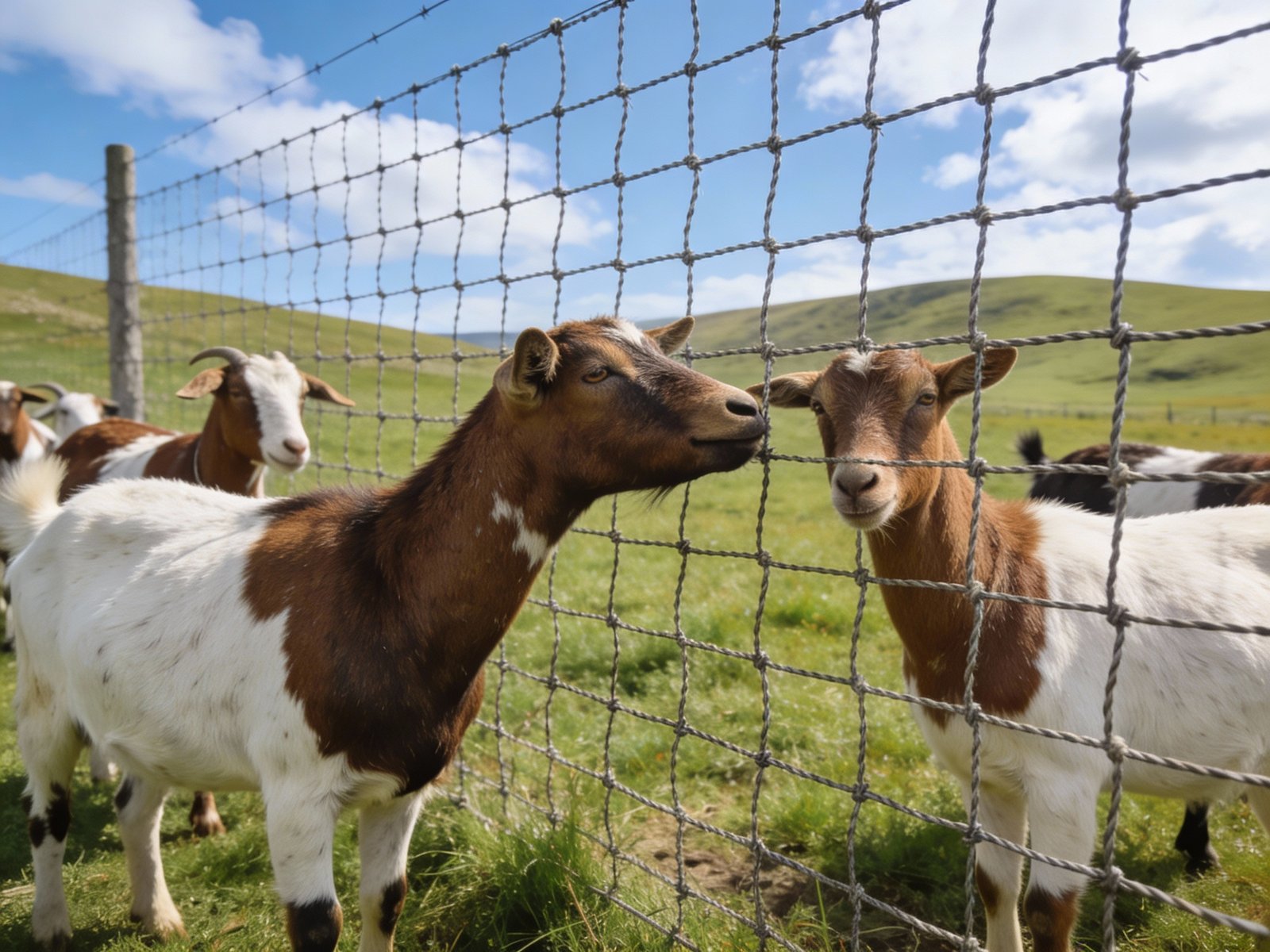
The best fencing for goats is woven wire fencing combined with one or more electric offset wires. Woven wire prevents goats from squeezing through or getting their heads stuck, while electric offsets discourage climbing, rubbing, and pushing. This combination provides the most reliable balance of containment, durability, and predator resistance for most goat operations.
Why This Question Matters
Goats are notorious for escaping poorly designed fences, which makes fencing one of the most common and costly mistakes for new goat owners. Many people assume that fencing suitable for cattle or horses will also work for goats—only to discover repeated breakouts, injuries, or predator losses. A weak fence doesn’t just fail to contain goats; it increases labor, repair costs, and long-term frustration. This question matters because the “wrong” fence often looks fine at installation but fails under real goat behavior, pressure, and time.
Key Factors to Consider
- Goat behavior, including climbing, rubbing, pushing, and testing fence weak points
- Wire spacing that prevents both escape and head entrapment
- Fence height relative to breed size and terrain slope
- Long-term durability under constant animal pressure
- Compatibility with electric deterrents for behavior control
Detailed Explanation
Goats require fencing that addresses both physical containment and behavioral pressure. Unlike many livestock species, goats actively test fences by leaning, rubbing, climbing, and pushing against them. A fence that relies only on visual presence or light tension will eventually fail, even if it appears adequate at first.
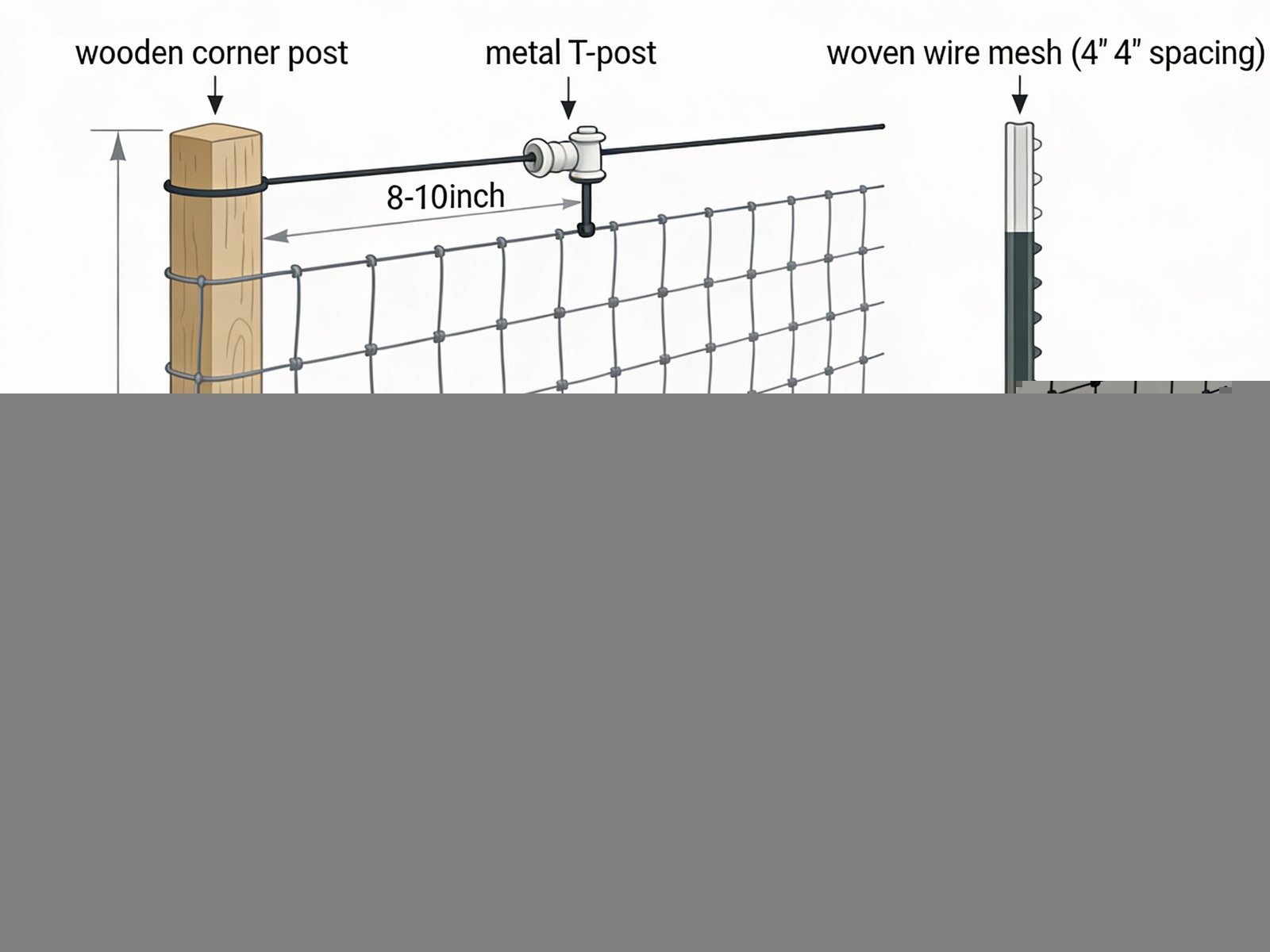
Woven wire fencing works well for goats because it creates a continuous physical barrier with consistent spacing. Properly sized woven wire prevents goats from slipping through gaps and significantly reduces the risk of head entrapment, which is a common injury issue with wider-spaced field fencing. When properly installed with solid corner bracing and posts set at correct intervals, woven wire holds its shape under repeated pressure.
However, physical fencing alone does not fully address goat behavior. Goats are persistent, and over time they will test the same pressure points—especially corners, gates, and high-traffic areas. This is where electric offset wires become critical. A single or double electric wire placed several inches inside or above the woven wire fence discourages contact before goats can lean or climb. This reduces stress on the fence and dramatically extends its lifespan.
The combination works because each component solves a different problem. Woven wire handles containment and safety, while electric offsets handle behavior. Together, they reduce escapes, maintenance frequency, and long-term repair costs. For most goat keepers—whether small homesteads or larger herds—this hybrid approach provides the most dependable and forgiving solution under real-world conditions.
Goat Behavior and Fence Pressure
Goats interact with fences very differently than cattle or sheep. They rarely respect boundaries passively and instead apply repeated pressure over time. This pressure is not always aggressive; it often comes from boredom, curiosity, or social behavior such as rubbing and playing. Areas near feeders, shelters, and gates experience the highest stress and are usually the first failure points.
Because goats test fences incrementally, weak designs may appear functional for weeks or months before failing. This delayed failure is why fencing decisions based solely on initial cost or appearance often lead to frustration. A fence must be designed to handle constant, low-level pressure rather than occasional impact. Electric offsets are especially effective here because they change behavior patterns early, before goats develop habits that damage the fence.
Wire Spacing and Safety Considerations
Wire spacing is one of the most critical technical details in goat fencing. Openings that are too large allow goats to push their heads through, which can lead to panic, broken horns, or strangulation if the animal becomes stuck. Young goats are particularly vulnerable because their heads fit through gaps that their bodies cannot.
Woven wire designed specifically for goats or sheep typically uses smaller vertical spacing that balances airflow and visibility with safety. The goal is not just to prevent escape, but to prevent injury. This is another reason cattle-style fencing often fails for goats—it prioritizes strength over spacing. Proper wire spacing reduces both veterinary risk and fence damage caused by trapped animals struggling to free themselves.
Terrain and Layout Factors
Fencing performance changes significantly depending on terrain. Slopes, uneven ground, and rocky soil create natural low points that goats exploit. On hillsides, effective fence height decreases, increasing the chance of climbing or jumping. In these areas, tighter post spacing and electric offsets become more important. Fence layouts that follow natural contours rather than straight lines tend to perform better and experience less long-term stress.
When This Works Well
- Mixed-age herds with kids and mature goats
- Permanent perimeter fencing with consistent daily pressure
- Properties with predator presence requiring strong physical barriers
- Operations seeking low escape rates and reduced repair frequency
When This Is Not Recommended
- Short-term or temporary grazing setups
- Extremely low-budget installations without power access
- Situations requiring frequent fence relocation
- Areas where electric fencing cannot be safely maintained
Alternatives or Better Options
In some situations, high-tensile electric fencing with multiple strands can work for goats, particularly in rotational grazing systems with well-trained animals. This option relies heavily on consistent voltage and maintenance and offers less physical protection against predators. Welded wire fencing may be used in small enclosures or pens but often lacks the flexibility needed for long-term perimeter fencing. These alternatives exist because not all operations prioritize permanence, predator resistance, or low maintenance equally.
Cost, Safety, and Practical Notes
Woven wire fencing combined with electric offsets typically has a higher upfront cost than simple wire systems, but it often proves cheaper over time. Reduced escapes, fewer injuries, and lower repair frequency offset the initial investment. Installation quality matters more than material brand—poor bracing or post depth will compromise even the best fence.
From a safety perspective, electric offsets should be installed at heights that discourage contact without increasing entanglement risk. Regular voltage checks and vegetation control are essential. This system works best when treated as long-term infrastructure rather than a temporary barrier.
Video Demonstration
The following video shows how woven wire fencing with electric offsets looks and functions in a real goat enclosure, including spacing, height, and animal interaction.
Quick Takeaway: For most goat keepers, woven wire fencing reinforced with electric offset wires offers the most dependable balance of containment, safety, and long-term durability under real goat behavior.