Short Answer
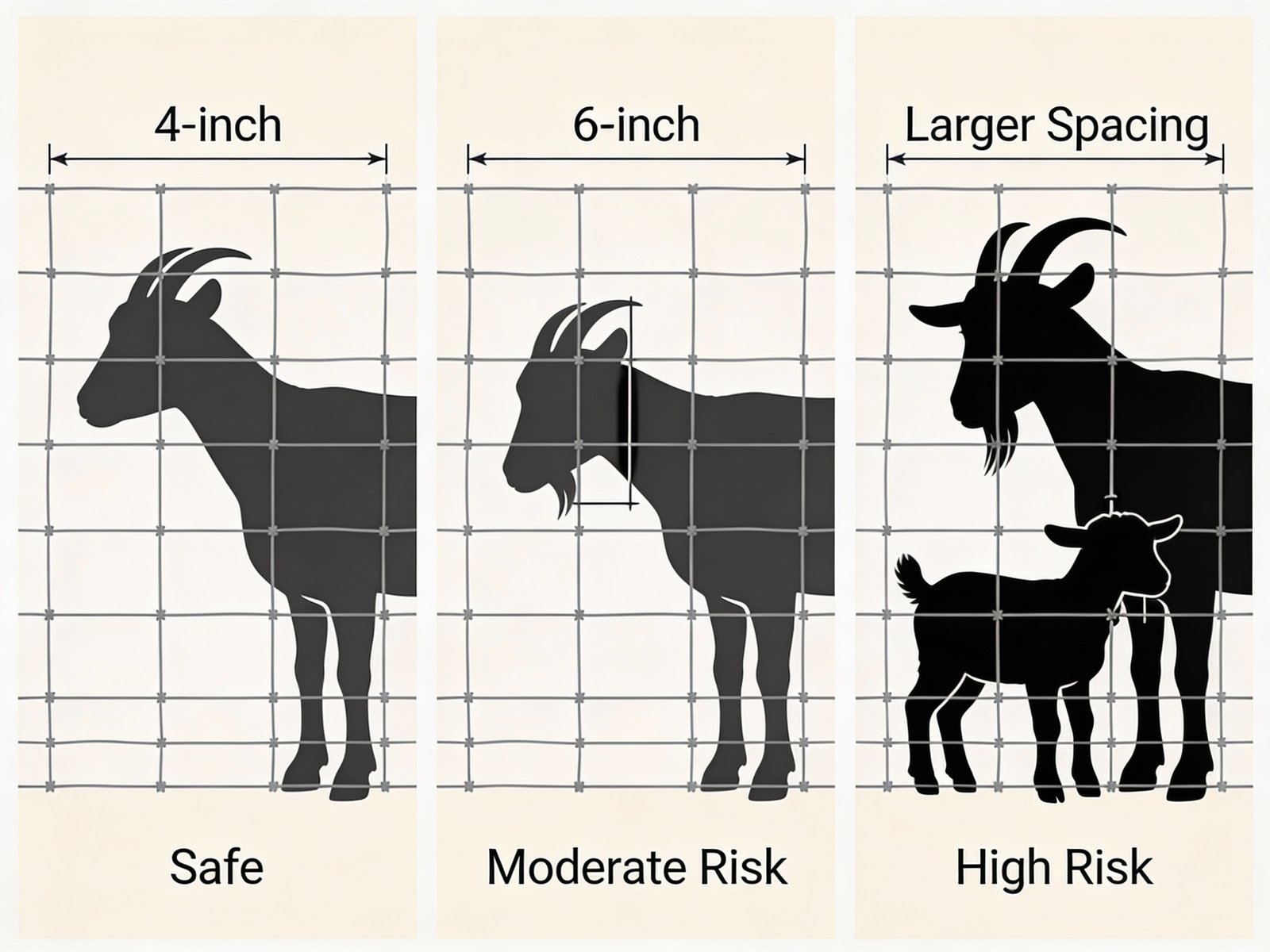
Most goats are reliably contained when wire spacing is 4 inches (10 cm) or smaller, especially on woven wire fencing. Larger openings allow goats—particularly kids and smaller breeds—to push their heads or bodies through, eventually widening gaps through repeated pressure. Consistent, tight spacing prevents escape attempts and reduces injury risk from head entrapment.
Why This Question Matters
Wire spacing is one of the most underestimated causes of goat escapes and fence-related injuries. Many fences look strong and tall but fail because openings are just wide enough for goats to test, squeeze, or get stuck. New goat owners often assume that wire designed for cattle or horses will work the same way, only to discover repeated escapes, bent fencing, or injured animals. Once goats learn that a fence can flex or give, they return to the same spot until it fails completely. Choosing the wrong wire spacing doesn’t just lead to escapes—it increases repair costs, labor, and the risk of serious injury.
Key Factors to Consider
- Goat size and age, especially kids that can fit through openings adults cannot
- Head shape and horn presence, which increase entrapment risk in wider gaps
- Repeated pressure from rubbing, leaning, and climbing behaviors
- Fence tension and flexibility that allow gaps to stretch over time
- Concentrated stress near gates, feeders, and high-traffic areas
Detailed Explanation
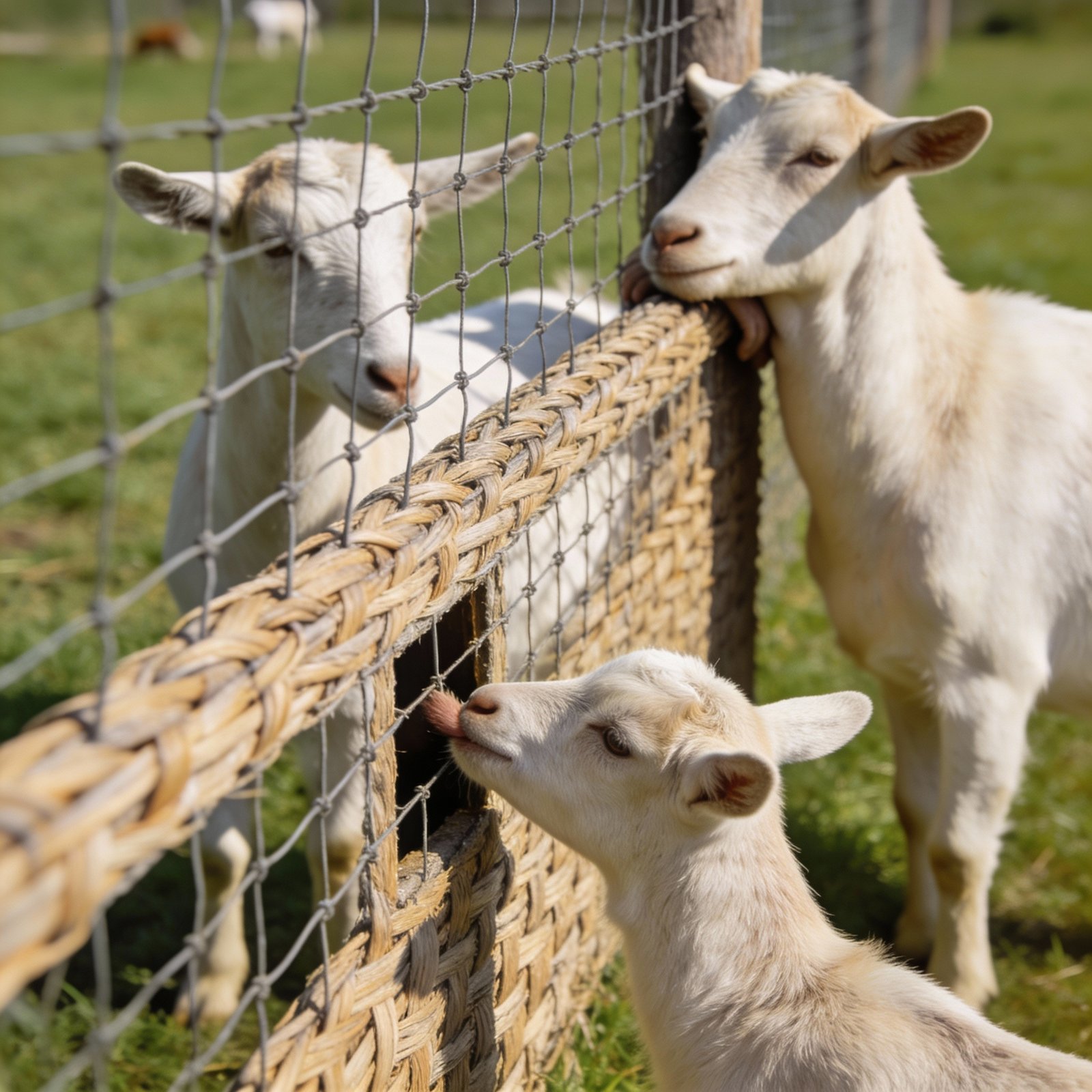
Goats escape fences less by brute force and more through persistence. When wire spacing is wider than about 4 inches, goats begin by pushing their noses or heads through openings, especially near the ground or in flexible sections. Even if their bodies do not fit initially, repeated pressure stretches wire, loosens fasteners, and gradually enlarges gaps. What starts as a harmless test often turns into a reliable escape route over time.
Head entrapment is an equally serious issue. Goats can push their heads through openings that are large enough going forward but too small when pulling back—particularly horned goats or fast-growing kids. Panic and struggling then deform the wire further, damaging the fence and risking broken horns, neck injuries, or suffocation. This is why spacing that looks “almost small enough” often performs worse than expected.
Woven wire fencing with consistent vertical and horizontal spacing is effective because it distributes pressure across the fence instead of concentrating it on a single strand. Spacing at or below 4 inches prevents both squeezing and head insertion for most goats. Larger spacings, such as 6 inches or more, are commonly used for cattle but fail under goat behavior because goats interact with fences continuously rather than respecting them as passive boundaries.
Over time, the fence that survives goat pressure is not the strongest-looking one, but the one that never gives goats a starting point. Proper wire spacing removes the opportunity for experimentation before bad habits form.
Kids vs Mature Goats: Why Spacing Matters More Than Height
Fence failures often begin with young goats. Kids are small enough to fit through openings that appear safe for adults, and once they succeed, they repeatedly use the same path. As they grow, they continue forcing their way through, stretching the wire and teaching the behavior to others. Even if adult goats never fit through initially, they benefit from the weakened structure left behind.
This is why wire spacing should always be chosen based on the smallest goat in the herd, not the average or largest. Planning for growth is essential, because spacing that works today may fail months later without any visible change in fence height or strength.
Head Shape, Horns, and Entrapment Risk
Horned goats are especially vulnerable to improper spacing. Openings that allow horns to enter but not exit cleanly can trap animals quickly. Once trapped, goats panic, causing rapid fence deformation and increasing injury risk. Dehorned goats are not immune either—jaw width and skull shape still matter.
Consistent spacing prevents goats from inserting their heads far enough to become stuck in the first place, which is far safer than relying on strength alone.
Fence Flexibility and Pressure Zones
Even correct spacing can fail if fencing is poorly tensioned. Areas near gates, corners, feeders, and shelters experience repeated pressure as goats gather and rub. In these zones, wire stretches faster, turning safe spacing into unsafe gaps. This is why proper post spacing and bracing are critical companions to correct wire size.
When This Works Well
- Permanent perimeter fencing designed for mixed-age goat herds
- Operations prioritizing low escape rates and reduced injury risk
- Properties with high goat traffic near fence lines
- Long-term installations where frequent repairs are undesirable
When This Is Not Recommended
- Short-term pens with constant supervision
- Temporary fencing for rotational grazing with trained goats
- Systems relying primarily on electric deterrence rather than physical barriers
- Situations where fencing must be frequently moved or reconfigured
Video Demonstration: Real-World Goat Fence Testing
Watch this demonstration showing goats testing wire spacing, head entrapment incidents, and proper woven wire fence installation:
Alternatives or Better Options
In some systems, multi-strand electric fencing with tight vertical spacing can work, especially for rotational grazing with trained goats. However, this approach relies heavily on consistent voltage and maintenance and offers less protection against predators. Welded wire may be acceptable for small pens but often lacks the flexibility needed for long-term perimeter fencing under constant pressure.
These alternatives exist because not all goat operations prioritize permanence, predator resistance, or low maintenance equally.
Cost, Safety, and Practical Notes
Choosing the correct wire spacing upfront is almost always cheaper than fixing problems later. Fences with overly wide spacing require constant retightening, patching, or reinforcement, especially after goats learn where they can apply pressure successfully. Veterinary costs from head entrapment injuries can exceed the cost difference between proper and improper fencing materials.
From a safety standpoint, preventing access is far better than relying on strength or visibility. The most cost-effective fence is the one goats never test, because it never teaches them how to escape.
Quick Takeaway
For most goats, wire spacing of 4 inches or smaller is the single most reliable way to prevent escapes and reduce injury risk over the long term.