Short Answer
An electric fence loses power over distance mainly due to electrical resistance, energy leakage, and load accumulation along the fence line. As current travels farther, voltage drops naturally, especially when wire quality, grounding, connections, or vegetation contact are inadequate. Longer fence runs amplify small inefficiencies, reducing shock strength at the far end.
Why This Question Matters
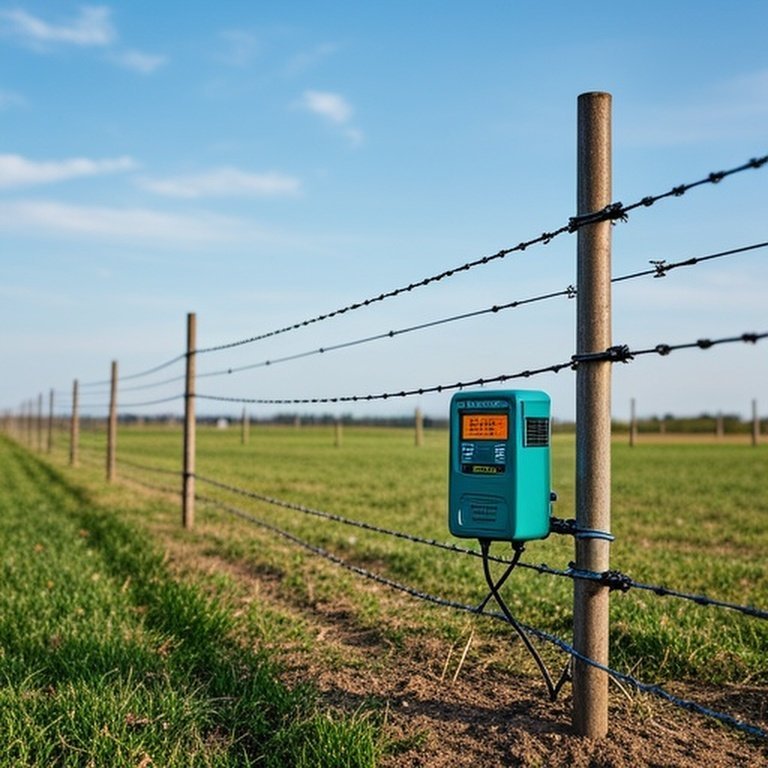
This is a common real-world problem for anyone running long perimeter fences, rotational grazing systems, or multi-paddock layouts. Many fence owners assume a weak shock at the far end means the energizer is defective, when in reality the system is working exactly as physics predicts. Misdiagnosing the issue often leads to unnecessary energizer upgrades, wasted money, or unsafe containment for livestock. Understanding why power drops with distance helps fence owners design smarter systems and avoid repeated troubleshooting cycles.
Key Factors to Consider
- Total fence length relative to energizer output capacity
- Wire material, diameter, and electrical resistance
- Grounding efficiency and soil conductivity
- Number of fence loads, branches, and connections
- Vegetation contact and leakage points along the line
Detailed Explanation
Electric fences operate by sending high-voltage pulses through conductive wire, but voltage does not remain constant over long distances. As electricity travels, it encounters resistance within the wire itself. Thinner wire, lower-quality steel, or corroded conductors increase resistance, which gradually reduces the available voltage at the far end of the fence line.
Another major factor is energy leakage. Every connection, splice, insulator, and gate handle introduces a small loss. Individually these losses seem minor, but over long distances they compound. Vegetation touching the wire creates continuous micro-shorts that drain energy pulse by pulse. The farther the fence runs, the more opportunities exist for these losses to accumulate.
Grounding quality becomes increasingly critical as distance increases. An electric fence circuit relies on energy returning through the soil. Poor grounding—such as insufficient ground rods, dry soil, or rocky terrain—limits the system’s ability to complete the circuit. Even a powerful energizer cannot deliver a strong shock at distance if the return path is weak.
Fence load also matters. Multiple fence lines, interior cross-fences, or branches connected to a single energizer divide available output. While voltage may still read high near the energizer, it drops noticeably at the farthest sections as energy is shared across the system. This effect becomes more pronounced as total fence length increases.
By the end of a long fence, voltage loss is rarely caused by one catastrophic failure. It is almost always the result of small, cumulative inefficiencies that become unavoidable when distance increases without proper system design.
How Fence Design Influences Distance Loss
Fence layout plays a significant role in how quickly voltage declines over distance. Straight, continuous perimeter fences maintain power more efficiently than systems with frequent branches, junctions, or dead-end runs. Each branching point increases electrical load and introduces additional resistance. Looping fence designs often perform better over long distances because energy can flow in multiple directions rather than terminating at a single far end.
Wire Type and Material Differences
High-tensile wire conducts electricity far more efficiently than lightweight polywire or thin galvanized strands. Polywire and tape are convenient for short or temporary fences, but their internal conductors limit long-distance performance. As fence length increases, conductor thickness and metal quality become critical. Systems designed for distance almost always rely on high-tensile or multiple-strand conductors to minimize voltage drop.
When This Works Well
- Long fences paired with energizers rated well above total fence length
- High-tensile wire with minimal splices and strong mechanical tension
- Proper grounding systems with multiple deep ground rods
- Clean fence lines with aggressive vegetation management
- Loop or double-feed fence designs instead of dead-end layouts
When This Is Not Recommended
- Lightweight polywire used for permanent long-distance fencing
- Single small energizers powering multiple long fence branches
- Dry, sandy, or rocky soils without enhanced grounding systems
- Fences with frequent gates, poor connections, or damaged insulators
- Systems where vegetation control is inconsistent or seasonal
Alternatives or Better Options
One option is upgrading to a higher-joule energizer designed for long fence runs. This increases available energy to compensate for distance losses but does not fix underlying inefficiencies. Another approach is redesigning the fence layout using loops or dual feeds, which distributes voltage more evenly across long lines. In some cases, splitting one large system into two independent zones with separate energizers provides better long-term reliability than forcing a single unit to cover excessive distance.
Cost / Safety / Practical Notes
Distance-related power loss often tempts owners to oversize energizers, but this can increase costs without addressing safety or efficiency. Stronger energizers also raise the risk of painful human contact if grounding and insulation are poor. From a cost perspective, improving wire quality, grounding, and layout usually delivers better returns than upgrading hardware alone. Regular voltage testing at multiple points along the fence is essential for identifying where losses occur. Practically, distance should be planned upfront—electric fences perform best when designed with realistic expectations rather than pushed beyond their intended range.
📍 Video Demonstration
Quick Takeaway
Electric fences lose power over distance not because they fail, but because resistance, leakage, grounding limits, and load accumulation are unavoidable. Smart design, proper materials, and realistic system sizing are the keys to maintaining effective voltage at the far end of long fence lines.