Short Answer
Yes, wildlife fencing is often subject to legal and environmental restrictions. Regulations may limit fence height, materials, electrification, placement, and impacts on wildlife movement or habitats. Requirements vary by location and land type, so permits or compliance with wildlife, environmental, or zoning rules may be required before installation.
Why This Question Matters
Wildlife fencing does not exist in a legal vacuum. Many landowners assume that fencing on private property is unrestricted, only to discover violations after installation. These mistakes can result in fines, forced removal, or unintended harm to protected species. Environmental concerns—such as blocking migration routes or injuring non-target animals—also draw scrutiny. This question reflects a real risk point: failing to consider legal or environmental rules can turn a well-intended wildlife control project into a costly liability, regardless of how effective the fence might be.
Key Factors to Consider
- Local, state, or national wildlife protection laws
- Land classification such as agricultural, residential, or conservation areas
- Fence height, electrification, and material restrictions
- Impacts on wildlife movement and migration corridors
- Permit, inspection, or reporting requirements
Detailed Explanation
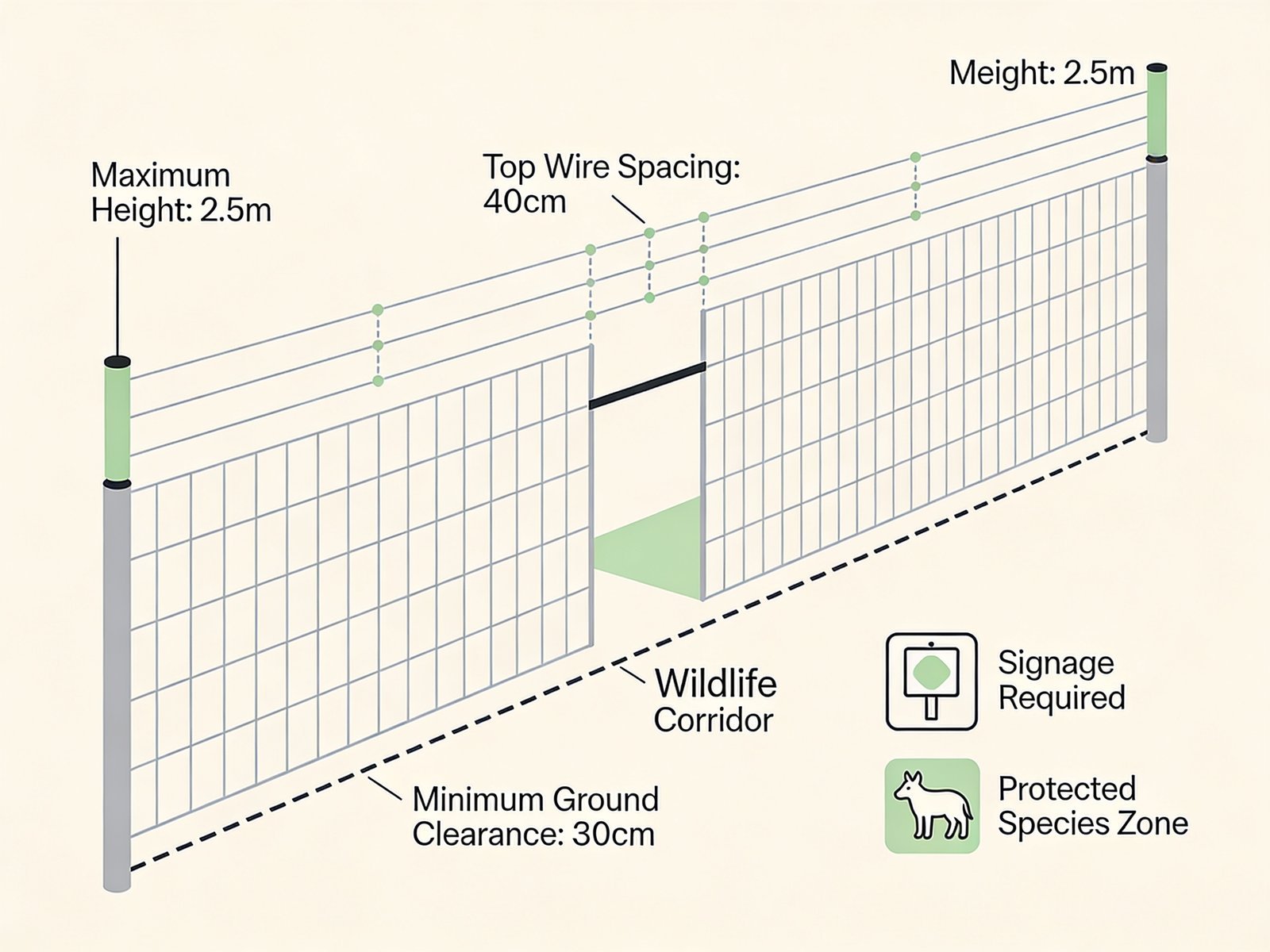
Legal restrictions on wildlife fencing usually focus on safety, land use, and wildlife protection. Many jurisdictions regulate fence height, especially near roads, property boundaries, or public land. Electrified fencing may be allowed only under specific conditions, such as signage, voltage limits, or approved energizers. In some regions, electrification is restricted entirely in residential or environmentally sensitive zones.
Environmental restrictions often address how fencing affects wildlife movement. Continuous fencing can fragment habitat, disrupt migration routes, or trap animals in dangerous situations. For this reason, some regulations require wildlife-friendly designs, seasonal openings, or minimum ground clearance. These rules aim to balance property protection with broader ecological impact.
Protected species add another layer of complexity. If endangered or regulated wildlife are present, additional approvals may be required, or certain fencing methods may be prohibited outright. Even well-built fences can become illegal if they unintentionally injure, entangle, or block protected animals.
Importantly, enforcement is often complaint-driven. Fences may remain unnoticed for years until a neighbor, agency, or environmental group raises concerns. At that point, retrofitting or removal is far more expensive than planning correctly from the start. The key takeaway is that legality depends not just on fence design, but on location, species presence, and intended use.
Regulatory and Environmental Considerations
How Regulations Differ by Location and Land Type
Rules for wildlife fencing vary widely between rural agricultural land, residential areas, and conservation zones. Agricultural land often allows more flexibility, while residential and mixed-use areas face stricter controls. Public land boundaries, waterways, and easements typically trigger additional restrictions. Understanding land classification is often the first step in determining what fencing is legally allowed.
Wildlife Movement and Environmental Impact Concerns
Environmental agencies focus on how fences affect animal movement rather than property protection goals. Long, continuous fences can create barriers that alter wildlife behavior at a landscape scale. This is why some regions require wildlife crossings, fence gaps, or seasonal removal. These rules are not about fence strength, but about maintaining ecological connectivity.
Enforcement, Permits, and Liability
Some wildlife fencing requires permits or inspections before installation. Others become regulated only after complaints or incidents occur. Liability can arise if fencing causes injury to wildlife, pets, or people. Clear signage, compliance with standards, and documented approvals reduce legal risk. Ignoring these factors often leads to retroactive enforcement.
When This Works Well
- Wildlife fencing installed on agricultural or private land with clear zoning
- Fence designs that account for wildlife movement and safety
- Projects reviewed or permitted before installation
- Areas without protected species or migration corridors
When This Is Not Recommended
- Installing fencing without checking local regulations
- Blocking known wildlife corridors or waterways
- Using electrification in restricted residential zones
- Permanent fencing in conservation or protected areas
Alternatives or Better Options
Wildlife-Friendly Fence Designs
Modified designs reduce ecological impact while still offering protection, helping meet regulatory requirements.
Temporary or Seasonal Fencing
Seasonal use can reduce legal and environmental conflicts in sensitive areas.
Non-Fence Wildlife Deterrents
In regulated zones, deterrents or habitat modification may be allowed where fencing is not.
Cost, Safety, and Practical Notes
Legal compliance adds time and cost to wildlife fencing projects but reduces long-term risk. Permits, environmental assessments, or design changes can increase upfront expense, yet they are usually cheaper than removal or penalties later. Safety considerations include signage, visibility, and avoiding entanglement risks. Practically, successful wildlife fencing starts with understanding regulations before materials are purchased or posts are set.
Quick Takeaway
Wildlife fencing is regulated more often than people expect. Checking legal and environmental rules first is part of building a fence that lasts.