Short Answer
Over the full lifecycle, wood fencing costs significantly more than metal wire fencing. While wood fences often appear affordable at installation, higher material prices, intensive labor, and ongoing maintenance cause total costs to exceed those of metal wire fencing over time. Metal wire fencing delivers lower long-term costs due to durability, simpler repairs, and reduced upkeep requirements.
Why This Question Matters
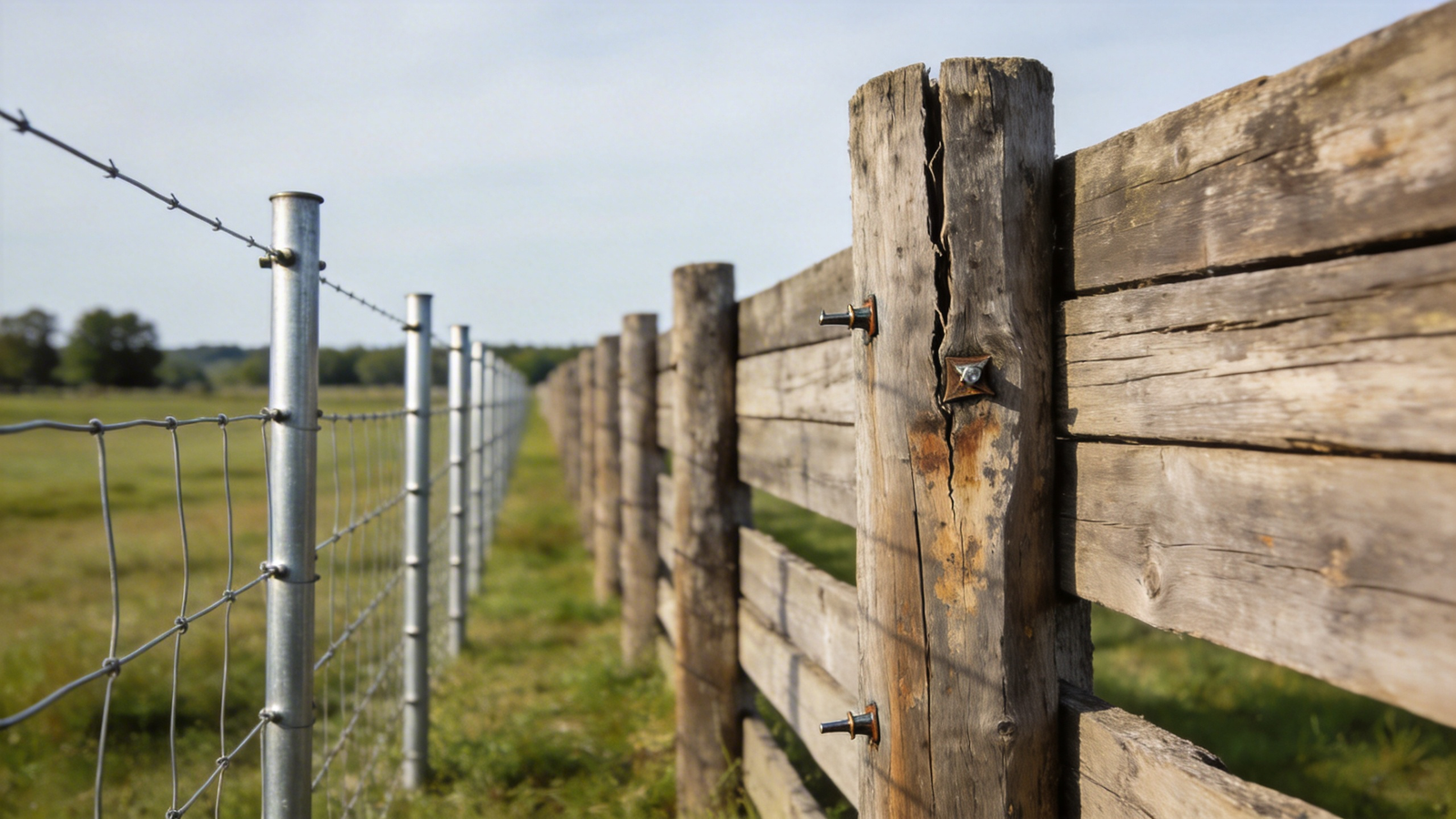
This is a real decision point for landowners choosing between appearance and long-term practicality. Wood fencing is commonly associated with strength, safety, and visual appeal, leading many to believe it represents a solid long-term investment. Metal wire fencing, by contrast, is often viewed as basic or temporary. These assumptions frequently result in cost overruns. Replacing rotted boards, repainting, and repairing structural failures can quickly inflate budgets. For large properties or agricultural use, misunderstanding total cost leads to repeated reinvestment and unexpected labor expenses. This question matters because fencing is rarely a short-term decision, and cost mistakes compound over decades.
Key Factors to Consider
- Material price differences per linear foot and post spacing
- Installation labor intensity and equipment requirements
- Maintenance frequency and replacement cycles
- Fence lifespan under weather and animal pressure
Detailed Explanation
Wood fencing carries high upfront material costs due to lumber pricing, post density, and hardware requirements. Installation is labor-intensive, requiring precise alignment, cutting, fastening, and often concrete setting. These factors increase initial expenses, especially for long fence runs. While visually appealing, wood fences rely on structural integrity that degrades over time, particularly in outdoor environments. Wood fencing per foot ranges from about $22 to $60 plus, and on a project basis of an average of 200 feet, a typical 6-foot privacy fence could cost between $5,500 to $6,500.
Metal wire fencing uses fewer raw materials per foot and allows wider post spacing. Installation is faster and less labor-intensive, especially for barbed wire or high-tensile systems. Even woven wire, which requires more steel, remains more efficient than wood fencing when measured across large areas. This efficiency keeps upfront and installation costs lower. Wire fencing is generally more affordable than wooden fencing, both in terms of materials and installation costs, requiring fewer posts and less labor.
Over time, wood fencing demands frequent maintenance. Boards warp, crack, rot, or loosen, requiring replacement. Protective treatments and repainting add recurring costs. In contrast, metal wire fencing typically requires tension adjustments, occasional wire replacement, and post maintenance. These tasks are quicker and less material-heavy. Wood is vulnerable to weather conditions such as rain, snow, and UV rays, which can cause fading, warping, and splitting, while wire fencing made from galvanized or coated steel is resistant to rust, corrosion, and harsh weather conditions.
Across 10 to 20 years, cumulative maintenance and replacement costs make wood fencing substantially more expensive than metal wire fencing. While wood may provide short-term aesthetic value, metal wire fencing delivers superior cost efficiency when longevity and scale are considered. Even with proper maintenance, wooden fences typically last 10-15 years depending on the wood type and environmental conditions, while wire fencing provides significantly longer service life.
How Fence Purpose Changes Cost Outcomes
Fence purpose strongly affects total cost. Decorative or residential-style wood fences prioritize appearance over efficiency, making higher costs acceptable. In agricultural or perimeter applications, functional containment outweighs visual appeal. Metal wire fencing aligns better with these priorities, keeping long-term expenses predictable and manageable.
Climate and Environmental Exposure
Climate accelerates cost differences. Moisture, insects, and temperature swings degrade wood rapidly, increasing maintenance frequency. Metal wire fencing tolerates harsh conditions better, especially when galvanized or coated. In demanding environments, wood fencing replacement cycles shorten dramatically, widening the long-term cost gap. Wood is also susceptible to mold and mildew growth in humid climates, and wooden fencing is vulnerable to damage from pests including termites and carpenter ants.
When This Works Well
- Residential or visible areas prioritizing appearance
- Short fence runs with limited exposure
- Projects where aesthetics justify higher spending
- Low-pressure environments with minimal animal contact
When This Is Not Recommended
- Large agricultural or pasture fencing projects
- Areas with high moisture, insects, or extreme weather
- Budget-constrained operations planning long-term use
- Situations requiring low-maintenance infrastructure
Alternatives or Better Options
High-tensile wire fencing offers low maintenance with greater durability than standard wire systems. Combination fencing uses wood for visible sections and metal wire elsewhere to control costs. PVC or composite fencing reduces maintenance compared to wood but increases upfront material costs. A farm fence built with wire mesh can cost around $100 per 10-foot section for extra tall designs, and more thrifty installations can reduce costs even further.
Cost, Safety, and Practical Notes
Wood fencing introduces hidden costs through rot, insect damage, and structural failure. Annual maintenance can equal a significant percentage of initial cost. Metal wire fencing carries lower injury risk when smooth wire is used, and repairs are faster and cheaper. From a practical standpoint, metal wire fencing scales better for large properties and long-term ownership, while wood fencing suits smaller, appearance-driven projects.
Installing a new wood fence costs around $3,300 for typical projects, with ongoing maintenance costs adding up over time. In contrast, steel and metal wire fencing provides superior longevity and requires minimal maintenance. The cost of labor with wood fencing is spent twice—once for installing it initially and a second time for replacement—versus doing it once with more durable materials.
Video Demonstration
Quick Takeaway
Wood fencing costs more than metal wire fencing over time. Its higher material prices, labor demands, and maintenance needs outweigh aesthetic benefits in long-term cost calculations.