Short Answer
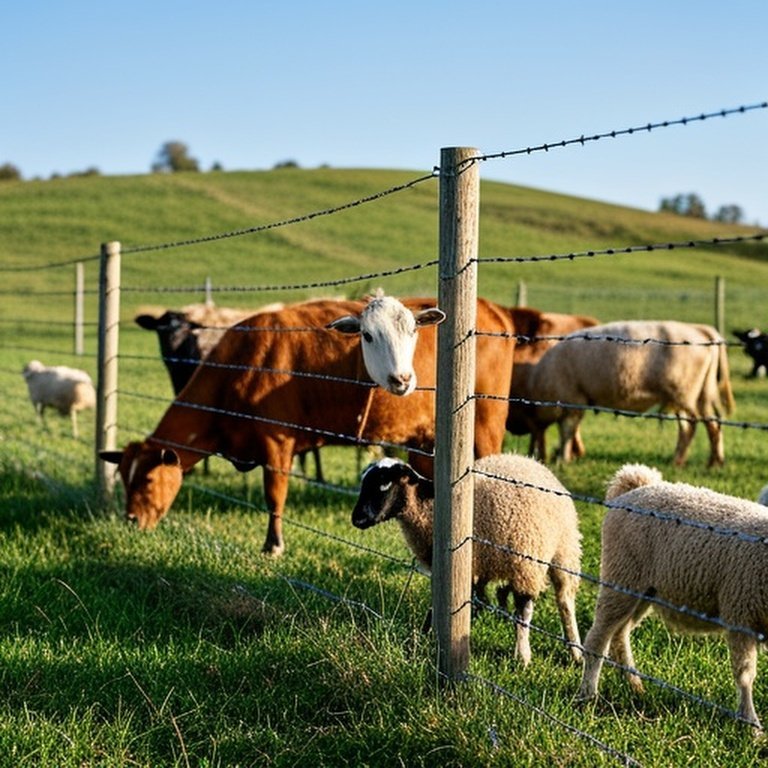
Yes—woven wire fence (also called field fence) is generally a very good option for cattle, goats, and sheep when properly selected and installed. It provides physical containment, resists pressure better than welded wire, and reduces escape risks for smaller livestock. However, mesh size, wire gauge, and post spacing must match the animal type.
Why This Question Matters
Choosing the wrong fence for livestock can lead to escapes, injuries, predator access, and repeated repair costs. Cattle push, goats climb, and sheep test weak points differently. A fence that works well for mature cattle may completely fail with goats. Woven wire fence is often marketed as “all-purpose,” but its performance depends heavily on configuration. Understanding whether it truly fits your livestock—and your terrain—helps prevent costly re-fencing and ongoing maintenance problems.
Key Factors to Consider
- Mesh spacing must prevent heads or horns from getting stuck
- Wire gauge affects resistance to animal pressure and stretching
- Post spacing determines overall fence stability and longevity
- Terrain slope increases tension stress and weak point risk
- Predator presence may require smaller bottom openings
Detailed Explanation
Woven wire fence is constructed with horizontal and vertical wires that are mechanically woven together rather than welded. This knot structure allows the fence to flex under pressure instead of snapping at rigid joints. That flexibility is a major advantage for cattle, which tend to lean and push rather than jump. When tensioned properly, woven wire distributes force across the panel instead of concentrating it at a single point.
For goats and sheep, mesh size becomes more important than raw strength. Goats are known for testing boundaries and inserting their heads through openings. Field fence with graduated spacing—smaller openings near the bottom—helps prevent entrapment and escapes. Sheep benefit from tight lower spacing that prevents lambs from slipping underneath. In these cases, woven wire typically performs better than barbed wire or smooth high-tensile strands alone.
Cattle require heavier gauge woven wire, especially for perimeter fencing. Lighter gauges can stretch over time if animals repeatedly lean on them. Proper bracing at corners and gates is critical, since tensioned woven wire relies on strong anchor points. Without solid end braces, the entire fence line may loosen.
Overall, woven wire works well across species because it combines strength with flexibility. When selected with the correct gauge and spacing—and installed with proper tension—it offers reliable, long-term containment for mixed livestock operations.
How Cattle Behavior Affects This Choice
Cattle typically challenge fences by leaning, rubbing, and pushing rather than climbing. Because of this, flexibility matters. Woven wire absorbs pressure more effectively than welded panels, which can break at weld points. However, cattle also test corners and gates heavily. A woven wire fence line without properly braced end posts can gradually sag under repeated pressure.
Mature cattle may respect fencing once trained, especially if paired with a single electric offset wire. Young cattle, however, are more curious and may test the fence repeatedly. In high-pressure areas such as feeding zones or water points, woven wire should be reinforced or combined with electric deterrence to reduce strain.
Calves vs Mature Cattle Considerations
Calves introduce different containment challenges. While mature cattle mainly push, calves may attempt to crawl through wider lower openings. Field fence with graduated spacing—smaller rectangles at the bottom—is ideal for preventing young animals from slipping through.
For goats and sheep, young animals are even more escape-prone. Lambs and kids can squeeze through surprisingly small gaps. Selecting woven wire with tighter bottom spacing (often 2×4 inches or similar) significantly reduces this risk. Fence height may not need to increase, but bottom containment becomes critical.
Terrain, Visibility, and Pressure Zones
On flat terrain, woven wire performs consistently and maintains tension well. On uneven or rolling ground, installation becomes more technical. Improper ground contact can create gaps underneath the fence, especially for sheep and goats.
Visibility also plays a role. Livestock are less likely to run into a visible fence. Woven wire is more visible than single-strand wire, which can reduce accidental impacts. However, high-traffic zones—such as near gates or feed areas—experience concentrated pressure and should be reinforced accordingly.
When This Works Well
- Mixed livestock operations needing one fence type for multiple species
- Perimeter fencing where physical barrier strength is essential
- Sheep or goat containment requiring small bottom openings
- Farms seeking long-term durability with moderate maintenance
- Areas where predator resistance is also a concern
When This Is Not Recommended
- Extremely large cattle pastures prioritizing lowest initial cost
- Rotational grazing systems needing rapid temporary fencing
- Rocky terrain where post installation is difficult
- Situations relying solely on psychological containment
- Very high-pressure feedlot-style environments without reinforcement
Alternatives or Better Options
High-Tensile Wire Fence
More economical for large cattle pastures. Works well when animals are trained and electric offsets are used. However, it provides less physical barrier protection for goats or sheep unless multiple strands are added.
Electric Netting (for Goats/Sheep)
Portable and effective for rotational grazing. Provides psychological deterrence but requires constant power and regular maintenance.
Welded Wire Panels
Rigid and strong in small enclosures, but less flexible under pressure. Better suited for pens rather than long perimeter runs.
Cost, Safety, and Practical Notes
Woven wire typically costs more upfront than basic barbed or smooth wire fencing due to material weight and installation labor. However, it often reduces escape-related losses and repair frequency over time. Labor is higher because tensioning and bracing must be done correctly.
Safety-wise, woven wire is generally safer than barbed wire for sheep and goats, as it reduces laceration risks. For horned animals, proper spacing is critical to prevent head entrapment. Adding a single electric offset strand can dramatically increase longevity by discouraging animals from leaning directly on the fence.
Long-term durability depends heavily on galvanized coating quality and proper tension during installation. Poor bracing, not material choice, is the most common failure point.
Quick Takeaway
Woven wire fence is a strong, flexible, and versatile option for cattle, goats, and sheep—especially when mesh spacing and gauge match the animal type. It performs best as a properly tensioned perimeter fence and becomes even more effective when combined with electric offsets in high-pressure areas.