
Short Answer
Most farm fence posts should be spaced 8 to 12 feet apart, depending on fence type, livestock pressure, and terrain. High-tensile wire fences can stretch up to 20–30 feet between posts, while woven wire and board fencing typically require closer spacing around 8–10 feet for proper support and durability.
Why This Question Matters
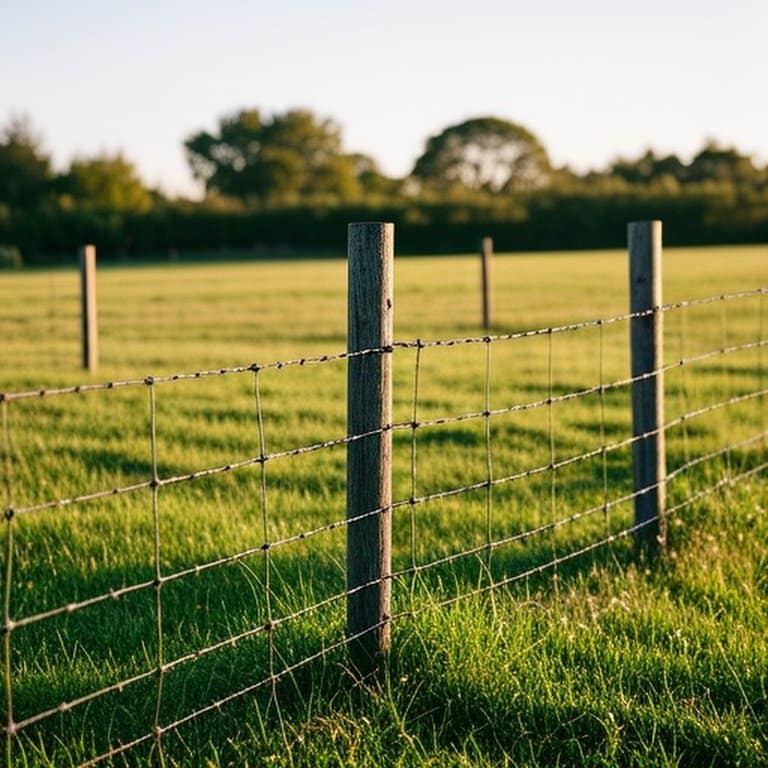
Post spacing directly affects fence strength, longevity, and cost. Space posts too far apart, and wire will sag, boards will warp, and livestock may push through weak sections. Space them too close, and you increase material and labor costs without meaningful structural benefit.
Proper spacing balances structural integrity with budget efficiency. It also determines how well your fence handles tension, wind, animal pressure, and ground movement. For large pasture installations, even a 2-foot difference in spacing can significantly impact total project cost. Choosing the right distance prevents premature repairs and ensures long-term stability.
Key Factors to Consider
- Fence type (woven, barbed, board, high-tensile)
- Livestock size and behavior pressure
- Terrain slope and soil stability
- Wind exposure and climate conditions
- Corner, brace, and gate reinforcement
Detailed Explanation
The standard spacing for most agricultural fencing falls between 8 and 12 feet because this range provides adequate support while controlling costs. For woven wire fencing, 8–10 feet is ideal. The mesh adds rigidity, but too much distance between posts allows sagging over time, especially under livestock pressure.
High-tensile wire fencing differs significantly. Because it relies on strong tension and fewer contact points, posts can be spaced 15–30 feet apart when properly braced. However, this requires strong corner assemblies and properly tensioned wires. Without correct bracing, wider spacing will lead to failure.
Board fencing, often used for horses, usually requires 8-foot spacing to prevent rail bending. Horses lean and test fences visually and physically, so closer spacing maintains safety and structural strength.
Terrain also plays a major role. On uneven or sloped ground, closer spacing helps maintain consistent fence height and prevents gaps at ground level. In sandy or soft soils, shorter spacing increases stability.
In most farm situations, 8–10 feet is the safest default for woven or board fencing, while high-tensile systems can extend spacing when properly engineered.
How Cattle Behavior Affects This Choice
Cattle lean, rub, and push against fencing. If posts are spaced too far apart, wires stretch and staples loosen over time. Closer spacing (8–10 feet) distributes pressure more evenly and prevents long-term sagging.
In heavy traffic areas—near water troughs or feed bunks—spacing should be tighter to handle concentrated force.
Calves vs Mature Cattle Considerations
Calves apply minimal force and can be contained with standard spacing. Mature cattle exert significant lateral pressure, especially in herd movement situations.
For goats and sheep, woven wire fencing benefits from closer spacing to prevent climbing and stretching of the mesh.
Terrain, Visibility, and Pressure Zones
Hilly terrain requires shorter spacing to maintain ground contact and reduce bottom gaps. Flat, stable soil may allow maximum recommended spacing.
Wind-exposed areas benefit from closer posts to reduce wire oscillation and long-term fatigue.
Gate openings and corner sections always require reinforced bracing regardless of standard spacing.
When This Works Well
- Standard pasture fencing using woven wire
- Board fencing for horses at 8-foot intervals
- Barbed wire with moderate livestock pressure
- Level terrain with stable soil
- Properly braced high-tensile systems
When This Is Not Recommended
- Extremely sandy or loose soil without added stability
- High-pressure confinement pens
- Areas with frequent flooding or erosion
- Heavy wildlife impact zones
- Temporary fencing setups
Alternatives or Better Options
Closer Spacing for High-Pressure Areas
In corrals or small paddocks, 6–8 foot spacing improves durability under constant pressure.
Stay Posts Between Main Posts
High-tensile systems often use fiberglass or steel stays between wider main posts to control wire movement.
H-Brace and Corner Assemblies
Instead of reducing spacing everywhere, strengthen corners and tension points for better long-term performance.
Cost, Safety, and Practical Notes
Wider spacing reduces upfront material costs but increases long-term sag risk if not properly tensioned. Closer spacing increases material cost but may reduce maintenance over time.
Improper spacing leads to leaning posts and wire fatigue. Always install strong corner braces before stretching wire. Use proper depth—at least one-third of post length underground—for stability.
Safety tip: Ensure posts are vertically aligned before tensioning wire. Uneven posts create structural weak points.
For most farms, 8–10 feet is the safest and most cost-effective spacing for woven and board fencing.
Quick Takeaway
Fence post spacing depends on fence type and livestock pressure. Use 8–10 feet for woven and board fencing, and 15–30 feet for properly braced high-tensile systems. Balance cost savings with long-term strength, especially in high-pressure or uneven terrain areas.