📋 Fencing Guides

How far apart should electric fence posts be?

Short Answer

Electric fence posts are typically spaced 10 to 30 feet apart, depending on fence type, terrain, and expected pressure. Smooth wire or polywire fences can use wider spacing, while high-tension or uneven ground requires closer placement. Proper spacing keeps the wire stable, maintains consistent voltage, and prevents sagging or grounding issues over time.

Why This Question Matters
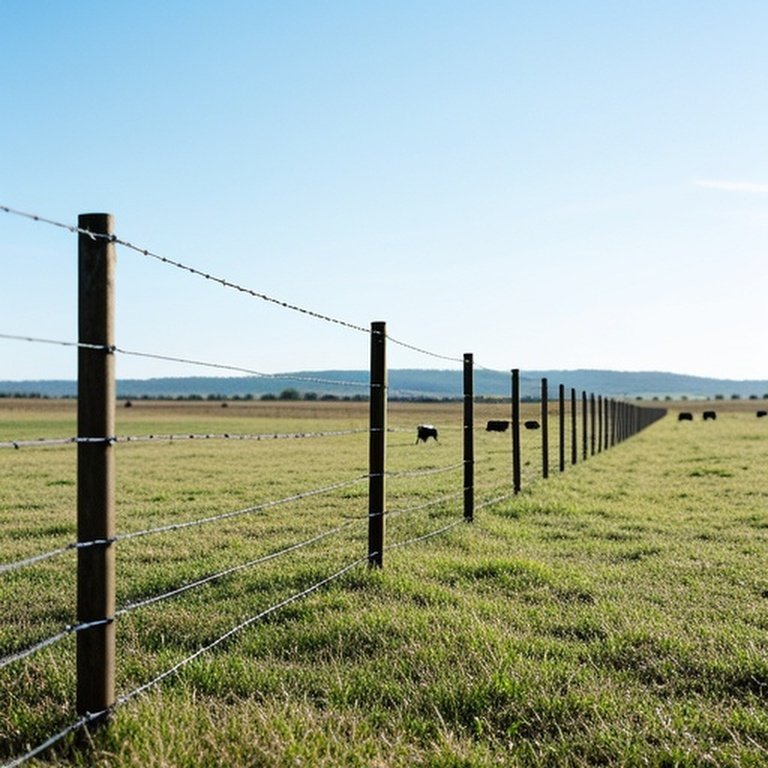
真实世界电围栏安装展示(正确柱间距与拉紧电线的牲畜围栏设置)

Post spacing is one of the most common causes of electric fence failure, especially for first-time installations. Many people follow manufacturer “maximum spacing” numbers without considering terrain, livestock behavior, or wire tension, leading to fences that work briefly and then lose effectiveness. Poor spacing often results in sagging wires, shorts from vegetation, and animals learning they can push through without consequence. Because adjusting post spacing after installation is labor-intensive and costly, getting this decision right upfront saves time, money, and frustration while preserving fence reliability.

Key Factors to Consider

  • Fence wire type and tension requirements
  • Terrain changes, slopes, and uneven ground
  • Livestock size, behavior, and pressure levels
  • Permanent versus temporary fence use
  • Wind load, vegetation growth, and weather exposure

Detailed Explanation

Electric fence post spacing works because tension, support, and wire behavior must stay balanced across the entire fence line. When posts are too far apart, the wire begins to sag under its own weight or from animal pressure. This sagging reduces shock effectiveness, increases vegetation contact, and allows animals to test weak points. Proper spacing distributes tension evenly so the fence stays upright, responsive, and visually respected by livestock.

For most permanent electric fences, a spacing of 12 to 20 feet is considered the most reliable range. This distance provides enough support to keep smooth wire tight without requiring excessive materials. In flat, open terrain with well-maintained vegetation, spacing can extend toward the upper end of this range. However, as soon as the ground becomes uneven, spacing should tighten to prevent dips and wire contact with soil or grass.

Temporary and portable electric fences, especially those using polywire or polytape, can often stretch to 20–30 feet between posts. These systems rely more on visual deterrence and lower tension, but they also demand careful monitoring. Wider spacing works best when livestock is already trained to electric fencing and the fence line remains straight and unobstructed.

Spacing must also change at corners, gates, and elevation shifts. These areas experience higher tension and movement, so posts should be placed closer together and reinforced as needed. Ignoring these transition points is a common reason fences fail despite “correct” average spacing elsewhere. Consistent performance comes from adjusting spacing to conditions, not rigidly following a single measurement.

How Terrain Affects Post Spacing

Steeper slopes, rolling ground, and uneven soil require closer post spacing to maintain consistent wire height and prevent grounding. In these conditions, 10–15 feet between posts is often more effective than wider layouts. The goal is visual consistency as much as electrical reliability.

Livestock Pressure and Behavior

Calm, fence-trained animals place less physical pressure on electric fences, allowing slightly wider spacing. Curious or aggressive livestock, such as goats or newly introduced cattle, require tighter spacing to prevent pushing, leaning, or wire deflection that reduces shock effectiveness.

When This Works Well

  • Flat terrain with minimal elevation change
  • Well-trained livestock familiar with electric fencing
  • Regular vegetation control along the fence line
  • Permanent fences with properly tensioned wire
  • Moderate weather exposure without extreme wind loads

When This Is Not Recommended

  • Highly uneven or rocky terrain without closer support
  • Areas with heavy vegetation growth and limited maintenance
  • High-pressure livestock unfamiliar with electric fences
  • Long fence runs without reinforced corners or braces
  • Temporary setups expected to last multiple seasons

Alternatives or Better Options

Closer Post Spacing

Using posts every 8–10 feet increases material cost but greatly improves reliability in difficult terrain or high-pressure areas. This option is ideal for long-term perimeter fencing where failure is not acceptable.

Hybrid Fencing Systems

Combining electric wire with physical fencing allows wider spacing while maintaining containment. This approach works well in predator-prone areas or where visual barriers are needed.

High-Tensile Electric Systems

High-tensile wire allows slightly wider spacing when installed correctly with strong corner bracing and proper tensioning. It requires more upfront precision but reduces long-term adjustments.

Cost / Safety / Practical Notes

Post spacing directly affects both installation cost and fence lifespan. Wider spacing reduces initial labor and material expense but often increases maintenance costs through sagging, grounding, and reinstallation. Closer spacing improves durability but adds upfront cost. A practical rule is to design for the worst section of the fence, not the easiest. Safety-wise, consistent spacing ensures predictable shock delivery, reducing the chance of animals challenging the fence or becoming entangled due to loose wires.

📍 Video Demonstration

Quick Takeaway

There is no single “correct” post spacing for electric fences. Most successful installations fall between 10 and 30 feet, adjusted for terrain, livestock behavior, and fence type. Choosing spacing based on real-world conditions—not maximum limits—creates a fence that remains effective long after installation.

Explore More Fencing Guides

Find the right fence for your farm — browse by livestock type, material, or project need.

Browse Livestock Guides Compare Materials
Quick reference: Permanent electric fence posts can sit 25–50 ft apart on flat ground (the conductor carries no structural load); woven wire needs 12–16 ft, barbed 12–16 ft, board ~8 ft. Set posts by the 1/3 rule (an 8-ft post ~2.5–3 ft deep) and space ground rods ~10 ft apart.

Post Spacing Chart by Fence Type

Use the figures below as a starting point, then tighten spacing as your terrain gets rougher or your livestock gets more demanding.

Indicative line-post spacing by fence type (flat/gentle vs. rough/sloping terrain)
Fence TypeLine-Post Spacing (flat/gentle)Rough/Sloping TerrainWhy
High-tensile smooth wire15–30 ft (up to 60–90 ft with stays/droppers)12–20 ftTensioned wire carries the span
Woven / field fence12–16 ft8–12 ftMesh needs frequent support
Barbed wire12–16 ft10–12 ftMore strands = closer posts
Permanent electric (HT/poly)25–50 ft20–30 ftWire carries almost no load; posts are just spacers
Temporary / portable electric (polywire)30–50+ ft25–40 ftStep-in posts, frequent moves
Board / rail fence~8 ft~8 ftRails span post-to-post

Notice that electric fences allow the widest spacing of any fence type. Because an electric conductor carries almost no structural load — it only has to stay suspended and deliver a pulse — the posts act as simple spacers rather than load-bearing members. That is a major cost advantage: a permanent electric line can run 25–50 ft between posts where a woven-wire fence would need a post every 12–16 ft, cutting your post count (and labor) by half or more over the same distance.

Post Spacing & Fence Height by Livestock

The animal you are containing changes both the height you build to and how closely you space posts. Heavier pressure, climbing, rooting, or run-through risk all push you toward tighter spacing.

Indicative fence height and spacing guidance by livestock type
LivestockTypical Fence HeightSpacing Note
Cattle48–54 inStandard spacing; electric lines can run wide on flat ground
Horses54–60 inCloser, highly visible posts to prevent run-through and injury
Sheep / GoatsWoven wire, ~42–48 inTight bottom and closer posts; goats test every weak point
PigsLow, ~30–36 inLow lines with a tight bottom and closer posts to stop rooting under
PoultryLow electric or netting, ~42 inFrequent posts; electric netting needs support every few feet

As a rule, the smaller or more determined the animal, the closer your posts and the tighter your bottom wire. Cattle on level pasture tolerate the widest electric spacing, while goats, pigs, and poultry demand frequent support and a low, snug bottom line to prevent animals from going under or through the fence.

The 1/3 Rule & How Deep to Set Posts

The standard guideline for setting any fence post is the 1/3 rule: at least one-third of the post's total length should be buried in the ground. That depth gives the post enough soil contact to resist leaning, heaving, and animal pressure.

  • 8-ft line post → set roughly 2.5–3 ft deep.
  • 7-ft line post → set roughly 2–2.5 ft deep.
  • Corner, end & brace posts → go deeper, about 3.5–4 ft, and brace them.

Is 2 feet deep enough for an 8-foot post? Generally no — especially for a corner, end, or brace post, or in frost-prone or sandy soil. Even for a plain line post, 2 ft is marginal; aim for about 2.5–3 ft to satisfy the one-third rule. Cold climates and loose soils push you deeper still: set posts below the local frost line so seasonal heaving cannot lift them, and add depth in sandy or saturated ground where holding power is weak.

Corner, End & Brace Post Spacing

Corners are where a fence lives or dies. Install a braced assembly at every corner, every gate, and every major dip or rise where the wire changes direction or grade. On long, straight runs, add an in-line brace roughly every quarter mile (about 1,320 ft) so a single broken wire or leaning post cannot collapse the whole stretch. For corners and ends, an H-brace gives the strongest, longest-lasting hold; a single diagonal brace is a lighter, lower-cost option for shorter or lower-tension runs. Always brace before you stretch wire — an unbraced corner will pull in within a season.

Ground Rod Spacing (Electric Fences)

How far apart do ground rods have to be? Space galvanized ground rods about 10 ft apart. A common guideline is three 6–8 ft rods per energizer, with more rods added for high-joule units. Drive the rods fully into moist soil — dry, rocky, or frozen ground grounds poorly — and keep them well away from utility, building, or well grounds to avoid stray voltage. Connect all rods to the energizer's ground terminal with a continuous, well-clamped wire. The circuit is only complete when the animal touches the wire and the pulse returns through the soil to the rods, so poor grounding is the number-one cause of weak fences. If your tester reads low voltage, add ground rods before you suspect the energizer.

Methodology & How to Cite

The figures in this reference are indicative industry guidelines compiled from standard fencing engineering practice (for example, NRCS-style fencing guidance) and are intended as starting points only. Actual spacing and depth vary with soil type, climate, frost depth, terrain, and the livestock being contained, so always verify your plan against local building code and conservation standards before installing. Suggested citation: "Livestock Fencing Hub — Electric Fence Post Spacing Guide."

Common Post-Spacing Mistakes to Avoid

Most fence failures trace back to a handful of spacing and setting errors that are cheap to avoid at build time but expensive to fix later:

  • Spacing line posts too wide for the fence type. Running woven or barbed wire at high-tensile spacing (25 ft+) leaves the wire to sag and belly between posts. Match spacing to the fence type in the chart above, not to whatever saves the most posts.
  • Setting posts too shallow. Skipping the 1/3 rule is the top cause of leaning lines. A post set 18-24 in deep will heave or pull in within a season or two, especially in frost or sand.
  • Skipping or under-building braces. An unbraced corner pulls inward the moment you tension the wire. Brace every corner, end, gate and long-run interval before stretching.
  • Ignoring terrain changes. Posts must follow dips and rises so the wire stays at a constant height; a post at the bottom of a dip keeps the wire from lifting and letting stock under.
  • Too few ground rods on electric fences. One short rod cannot complete the circuit in dry soil. Add rods (about 10 ft apart) before blaming the energizer for low voltage.

Frequently Asked Questions

How far apart should electric fence posts be?

For a permanent electric fence, line posts can sit 25-50 ft apart on flat ground because the conductor carries no structural load and the posts act only as spacers. Tighten to 20-30 ft on rough or sloping terrain, and temporary polywire can stretch 30-50+ ft between step-in posts.

What is the 1/3 rule for fence posts?

The 1/3 rule says at least one-third of a post's total length should be set in the ground - for example, an 8-ft post buried about 2.5-3 ft deep. That depth gives enough soil contact to resist leaning and frost heave. Corner, end and brace posts go deeper, around 3.5-4 ft, and are braced.

Is 2 feet deep enough for an 8-foot post?

Generally no. Two feet is below the one-third guideline for an 8-ft post and is marginal even for a plain line post; aim for about 2.5-3 ft. Go deeper for corner, end or brace posts, and in frost-prone or sandy soils set posts below the local frost line so heaving cannot lift them.

How far apart do ground rods have to be for an electric fence?

Space galvanized ground rods about 10 ft apart, with a common guideline of three 6-8 ft rods per energizer (more for high-joule units), driven into moist soil and kept away from utility grounds. Poor grounding is the number-one cause of weak electric fences, so add rods before suspecting the energizer.