
Sheep Fencing Guide
Overview
Sheep fencing is designed to contain sheep safely while protecting them from predators and preventing escape. Because sheep are agile, curious, and often push against barriers, fencing systems must balance strength, spacing, height, and cost efficiency.
This guide covers the most effective sheep fencing types, material comparisons, installation methods, cost planning, and predator-resistant strategies. It is ideal for small farms, commercial operations, and rotational grazing setups.
This page focuses specifically on sheep containment systems. For cattle or mixed livestock fencing, refer to the Cattle Fencing Guide and Goat Fencing Guide.
What This Guide Covers
Woven Wire Sheep Fencing
High-tensile woven wire is the most common sheep fencing solution because its tight vertical and horizontal spacing prevents lambs from slipping through while still allowing good visibility and airflow. It also offers strong physical resistance against pushing and rubbing, making it ideal for permanent perimeter fencing and high-traffic paddocks.
For maximum durability, choose galvanized woven wire with fixed-knot or high-tensile construction and pair it with well-braced corners to keep the mesh tight over long distances. Visit the Woven Wire Fence Guide to compare mesh patterns, gauge options, and recommended post spacing for different flock sizes.
Electric Sheep Fencing
Electric sheep fencing can be installed as permanent multi-strand high-tensile wire or as temporary polywire/polybraid systems for rotational grazing. When voltage is kept consistently high and sheep are trained, the psychological barrier of an electric shock is very effective at preventing escapes and discouraging predators from testing the fence line.
Permanent systems often use five to seven high-tensile wires with the lower wires spaced closely to block lambs, while temporary systems rely on step-in posts and lightweight conductors for quick setup and removal. For energizer sizing, grounding layouts, and safe insulator choices, see the Electric Fence Installation Guide or review detailed electric fence cost comparisons.
Electric Fence Installation Guide
Predator-Proof Sheep Fencing
Coyotes, stray dogs, and foxes are among the most serious threats to sheep, especially lambs on pasture. A predator-resistant design usually combines a strong woven-wire barrier with one or more hot offset wires to stop predators from climbing, jumping, or digging under the fence.
Many producers run a hot wire 6–8 inches above ground on the outside to deter digging, plus a higher offset wire to stop climbing and leaning. For system layouts, offset hardware, and example predator-proof configurations, including ways to prevent digging under the fence, explore the Predator Proof Fence Guide.
Sheep Fence Height & Spacing
Most sheep fencing ranges from 39 to 48 inches in height, with taller options favored where predator pressure or jumping breeds are a concern. Wire spacing is tightest near the ground—often 3–4 inches between verticals and closer horizontals—to prevent lambs from crawling under or through.
As the fence gets higher, horizontal spacing can gradually increase because mature sheep are less likely to push through upper openings. For recommended height charts and spacing patterns by breed and pasture type, refer to the Fence Height Guide.
Portable Sheep Fencing
Portable sheep fencing, commonly in the form of electrified netting, is ideal for rotational grazing and short-term paddocks. Pre-assembled nets with built-in posts make it fast to create new cells, adjust paddock size based on forage, and rest overgrazed areas.
Because electrified netting has many horizontal and vertical conductors, it is very effective at deterring predators and keeping lambs in, but it depends on reliable energizers and good grounding. For setup sequences, gear checklists, and paddock layout ideas, see the Portable Livestock Fencing Guide.
Portable Livestock Fencing Guide
Corner & Gate Systems
Strong corners and gate assemblies carry most of the tension in both woven-wire and high-tensile fences, so they must be overbuilt rather than minimal. Typical sheep fences use H-braces with large diameter posts and brace wire to distribute load and prevent the fence from sagging over time.
Gates should align with equipment paths and handling areas, and they need solid hinge and latch posts that will not move when animals crowd the opening. For brace dimensions, post spacing, and gate hardware recommendations, visit the Fence Corner Bracing Guide.
Sheep Fence Cost Breakdown
Sheep fence cost per acre depends heavily on material choice, wire type, post spacing, labor rates, and terrain complexity. Woven wire with driven posts has a higher upfront cost but often lasts longer, while high-tensile electric systems reduce material use at the expense of energizer and maintenance requirements.
Budgeting should account not only for initial installation but also for long-term vegetation control, repairs, and equipment like post drivers or tensioners. For sample cost tables and budgeting worksheets, consult the Fence Cost & Budgeting Guide.
Sheep Fencing for Uneven Terrain
On sloped or rocky land, sheep fences must follow ground contours closely to avoid gaps under the mesh or wires. Flexible woven wire can be stepped or gently bent along the slope, and extra line posts may be needed in dips or rises to keep the fence tight.
In shallow soil or rocky ridges, producers often use shorter post spacing, rock-drilling, or a combination of steel and wood posts to achieve secure anchors. For layout strategies and slope-specific hardware, see the Fence Planning Basics Guide.
High-Tensile Wire Systems
High-tensile wire systems are popular for long perimeter fences on large sheep operations because they use fewer posts and can span long distances when properly tensioned. These systems typically rely on multiple smooth wires, some of them electrified, with tight spacing near the bottom to contain lambs.
Correct installation requires tensioning tools, in-line strainers, quality insulators, and robust corner assemblies. For strand configuration examples and tension guidelines, refer to the High Tensile Fence Guide.
Legal Boundary & Zoning Issues
Before building sheep fencing, it is important to confirm property lines, easements, and setback requirements with local authorities or a surveyor. Many regions have specific livestock containment standards, such as minimum fence heights, construction types, or shared boundary responsibilities between neighbors.
Non-compliant fences may need to be moved or rebuilt later, which can be much more expensive than planning correctly from the start. For checklists and common regulation examples, see the Farm Fence Regulations Guide.
Common Decision Scenarios
If You Need a Low-Cost Setup
For low upfront cost, many small farms choose multi-strand electric or portable netting rather than full woven-wire enclosures. These options reduce material use per foot and can be redeployed as grazing patterns change, which spreads investment over time.
However, they require reliable energizers, good grounding, and regular vegetation management to keep voltage high enough to contain sheep. For price comparisons between netting, wire, and mesh systems, visit the Electric Fence Cost Guide.
If Predator Pressure Is High
Where coyotes or dogs are common, combining a strong woven-wire fence with one or more hot offset wires provides both a physical and psychological barrier. The mesh stops animals from squeezing through, while the hot wires condition them not to approach or climb the fence.
Producers may also add buried wire or apron mesh at the base in extreme predator zones to deter digging. For layout diagrams and hardware lists, see the Predator Fence Systems guide.
If Terrain Is Uneven
On rolling or broken ground, flexible woven wire and closely spaced posts usually track the surface better than rigid panels. Stepping the fence at grade changes and using additional braces on steep slopes helps prevent wire from lifting off the ground or over-tightening on high spots.
Good planning includes walking the entire proposed fence line and adjusting the route to avoid severe obstacles when possible. For terrain-specific planning tips, use the Fence Planning for Sloped Land guide.
Fence Planning for Sloped Land
If You Want Minimal Maintenance
High-tensile systems with quality posts and hardware can operate for many years with only periodic tension checks and spot repairs. Galvanized smooth wire resists rust, and well-built braces reduce the need for frequent re-tightening.
Permanent energizers on mains power or solar units with good batteries also cut down on day-to-day oversight compared to small portable chargers. For minimal maintenance configurations and material choices, see the Low Maintenance Fence Options guide.
If You Run Rotational Grazing
Rotational grazing systems benefit from portable electric netting or polywire that can be moved quickly to create new paddocks. This flexibility allows you to adjust stock density, protect regrowth, and respond to seasonal forage differences without rebuilding permanent fences.
Many graziers keep a permanent perimeter fence and then subdivide with temporary lines inside. For layout templates and gear lists, see the Rotational Grazing Fence Setup guide.
Rotational Grazing Fence Setup
Key Design & Planning Considerations
Fence Height & Spacing
Sheep fences typically range from 39 to 48 inches in height, with shorter heights used for docile breeds and taller heights used where predators or jump-prone animals are a concern. Wire spacing must be tight at the bottom to prevent lamb escape, and vertical stays should be close enough to avoid head entrapment.
Uniform spacing also makes fences easier to tension and repair and helps maintain a consistent appearance across the property.
Safety Factors
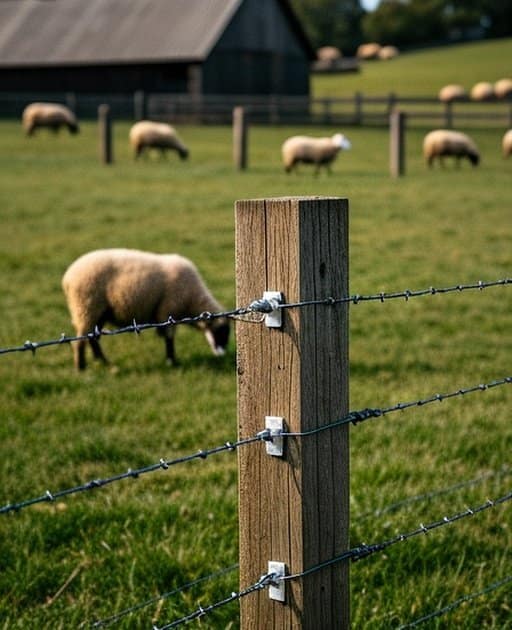
Barbed wire is not recommended for sheep because it can tear wool and increase the risk of cuts and infections when animals push or rub against the fence. Smooth high-tensile wire or woven wire provides secure containment with less injury risk.
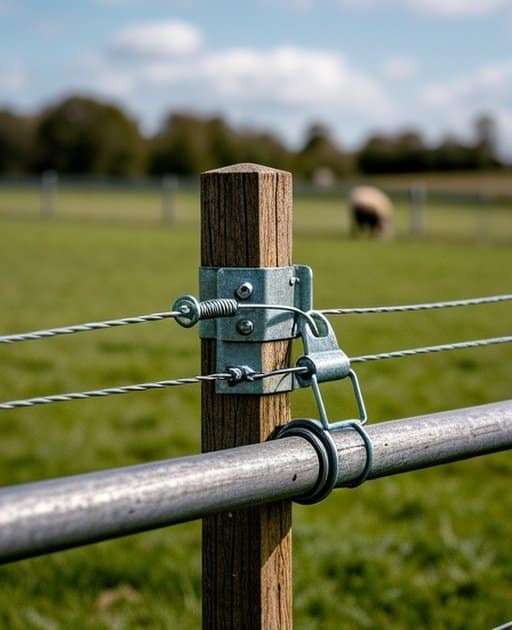
Electric systems must maintain adequate voltage—often 3,000 to 5,000 volts for sheep—to prevent animals from testing and learning to ignore the fence.
Cost & Maintenance
Initial fencing costs reflect wire type, post material, fence height, terrain, and the amount of bracing needed at corners and gates. Long-term expenses include replacing broken posts, tightening loose wires, fixing damaged sections, and controlling vegetation along electric fences to prevent shorts.
Planning for these lifecycle costs up front helps you choose materials that match your budget and labor capacity.
Installation Complexity
Woven wire installation is more complex because it requires stretching the mesh to proper tension and building strong braces that can withstand continuous load. High-tensile electric fences also demand tensioners, insulators, and careful layout around corners and elevation changes.
Electric netting and simple multi-strand temporary fences are easier to install but depend on reliable power and more frequent monitoring.
Legal & Boundary Considerations
Local regulations may dictate minimum fence heights, construction details, or responsibilities for boundary fences shared with neighbors. Some jurisdictions also require that livestock owners prevent animals from straying onto public roads, which makes secure perimeter fencing essential.
Checking these rules before construction helps avoid disputes and costly modifications later.
Related Fence Systems
- Cattle Fencing Guide – For larger livestock containment
- Barbed Wire Fencing Guide – Traditional ranch fencing
- Electric Fence Installation Guide – Energizer and wire systems
- Fence Planning Basics Guide – Layout and boundary setup
- Fence Cost & Budgeting Guide – Full cost analysis
Frequently Asked Questions
What is the best fence for sheep?
Woven wire fencing with tight vertical spacing is the most reliable solution for permanent containment and predator protection.
How tall should sheep fencing be?
Most sheep fencing height ranges between 39–48 inches depending on breed and predator pressure.
Is barbed wire safe for sheep?
Barbed wire is generally not recommended because it can damage wool and cause injuries.
Can electric fencing hold sheep?
Yes, if voltage is maintained properly and animals are trained, electric fencing is highly effective.
How much does sheep fencing cost per acre?
Costs vary widely depending on material type, terrain, and labor. Cost per acre is usually lowest with high-tensile electric systems for large areas.
Final Recommendations
Sheep fencing must balance containment, predator protection, durability, and cost efficiency to perform well over many seasons. For permanent perimeter fences, woven wire combined with strong corner bracing and, where needed, electric offsets provides a robust and long-lasting solution.
For rotational grazing or lower-budget setups, portable electric netting or multi-strand high-tensile wire offers flexibility and lower material cost, as long as you can maintain energizer performance. Choose your system based on terrain, predator risk, flock size, available labor, and long-term maintenance goals, and use the linked guides for detailed cost breakdowns and step-by-step installation help.