Short Answer
Yes, horses typically need both perimeter fencing and cross fencing, but they serve different purposes. Perimeter fencing provides the primary safety and containment boundary, while cross fencing manages movement, grazing, and herd separation inside the property. Using both together improves safety, control, and long-term land management compared to relying on a single fence type.
Why This Question Matters
Many horse properties start with a single outer fence and assume that is enough. Problems usually appear later—overgrazed pastures, difficult herd management, or horses congregating in unsafe areas. Some owners avoid cross fencing to save money, while others overbuild interior fences that do not need the same strength as perimeter lines. These misunderstandings lead to unnecessary costs, inefficient land use, or safety risks. This question often comes up when expanding acreage, adding horses, or transitioning from simple turnout to managed grazing systems.
Key Factors to Consider
- Purpose of the fence: containment versus management
- Horse traffic and pressure at boundaries
- Pasture size and grazing rotation needs
- Safety requirements at property edges
- Budget allocation between fence types
Detailed Explanation
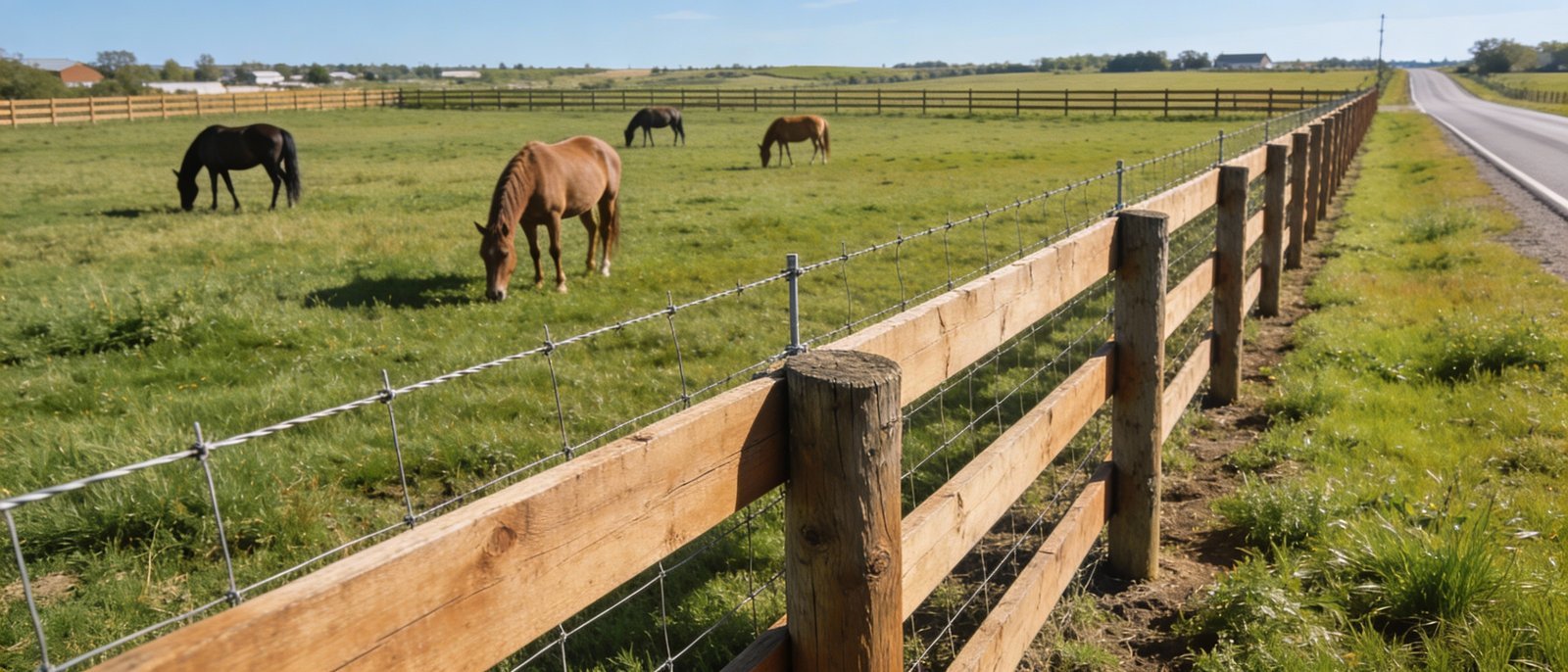
Perimeter fencing and cross fencing perform fundamentally different roles. Perimeter fencing is the final containment barrier. It protects horses from roads, neighboring animals, and external hazards. Because failure at the perimeter has the highest consequences, these fences must prioritize visibility, durability, and safety under pressure.
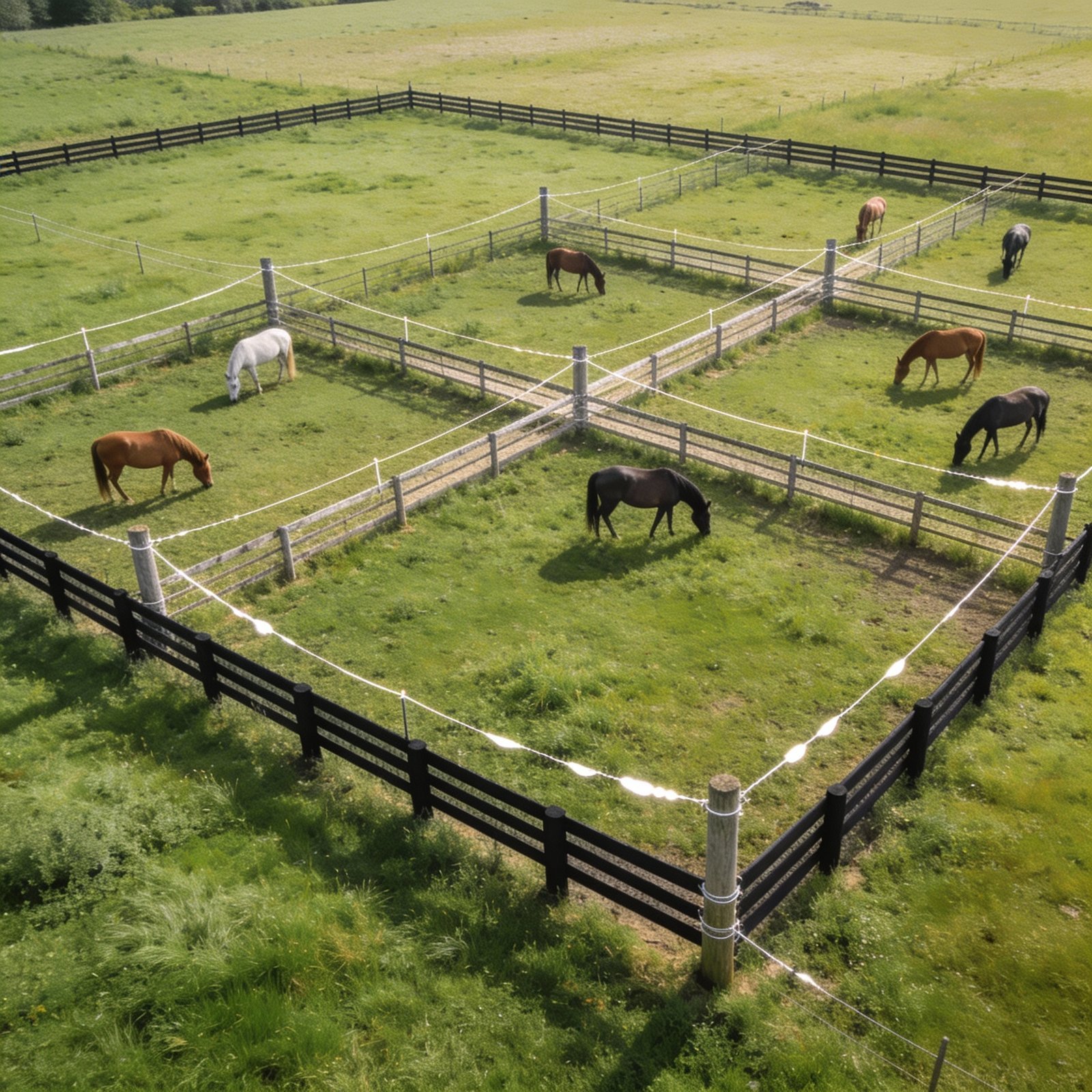
Cross fencing, by contrast, is a management tool. It controls how horses move within the property, separates groups, and supports rotational grazing. Cross fences experience less sustained pressure and usually do not require the same structural strength as perimeter fences. Their value lies in flexibility and layout rather than brute force.
Relying on perimeter fencing alone often leads to uneven pasture use. Horses naturally favor certain areas, causing overgrazing, mud buildup, and erosion. Cross fencing distributes pressure more evenly and allows land to recover. From a safety perspective, it also reduces crowding near gates and water sources by guiding movement.
The key is understanding that not all fences need to be built to the same standard. Overbuilding cross fencing wastes resources, while underbuilding perimeter fencing increases risk. When both fence types are used intentionally, properties become safer, easier to manage, and more adaptable over time. Horses benefit from clearer boundaries, and owners gain better control without increasing injury risk.
Safety Role of Perimeter Fencing
Perimeter fencing carries the highest safety responsibility on a horse property. It defines the absolute limit of where horses can go and separates them from external dangers. Roads, neighboring livestock, wildlife, and unfamiliar environments all increase risk if a perimeter fence fails.
Because of this, perimeter fencing should be designed for visibility and reliability, not just containment. Horses encountering a boundary at speed or under stress must recognize it early and disengage safely. This is why perimeter fences are often more substantial and carefully maintained than interior fences.
Management Role of Cross Fencing
Cross fencing exists to manage space, not to restrain force. Its primary function is guiding behavior—directing grazing patterns, separating herds, and controlling access to resources. Because cross fences are encountered daily in calm conditions, they can rely more on deterrence and visibility.
Electric cross fencing is common because it is flexible, cost-effective, and easy to modify as needs change. Good cross fencing reduces wear on perimeter fences by preventing horses from concentrating pressure in one area.
When This Works Well
- Properties with multiple pastures or grazing zones
- Herds requiring separation or rotation
- Land management focused on pasture health
- Clear distinction between boundary and interior fencing
- Owners seeking flexibility without compromising safety
When This Is Not Recommended
- Very small properties with limited space
- Temporary turnout areas without grazing management
- Situations where perimeter fencing is already inadequate
- Properties unable to maintain multiple fence lines
- Areas where terrain prevents effective cross fencing
Alternatives or Better Options
On small properties, well-placed gates and limited cross fencing may achieve similar management benefits without full subdivision. In some cases, temporary electric fencing can replace permanent cross fencing, offering flexibility without long-term commitment.
For properties transitioning gradually, starting with strong perimeter fencing and adding cross fencing later allows costs to be spread over time. Alternatives exist to scale fencing complexity with property needs rather than building everything at once.
Cost, Safety, and Practical Notes
Perimeter fencing typically represents the largest fencing investment due to its safety role. Cross fencing costs are usually lower and more flexible, especially when electric systems are used. Attempting to save money by weakening perimeter fences often leads to higher costs through escapes, injuries, or liability.
From a safety standpoint, separating fence roles reduces risk. Strong perimeter fences protect against external hazards, while lighter cross fences manage movement internally. The practical trade-off is complexity versus control. Most horse properties achieve the best balance by investing heavily in perimeter fencing and treating cross fencing as a scalable management tool.
Video Demonstration
This video demonstrates how perimeter fencing and cross fencing work together on horse properties to improve safety, grazing control, and daily management.
Quick Takeaway
Perimeter fencing keeps horses safe; cross fencing keeps land and movement manageable. Most properties need both to function efficiently and safely.