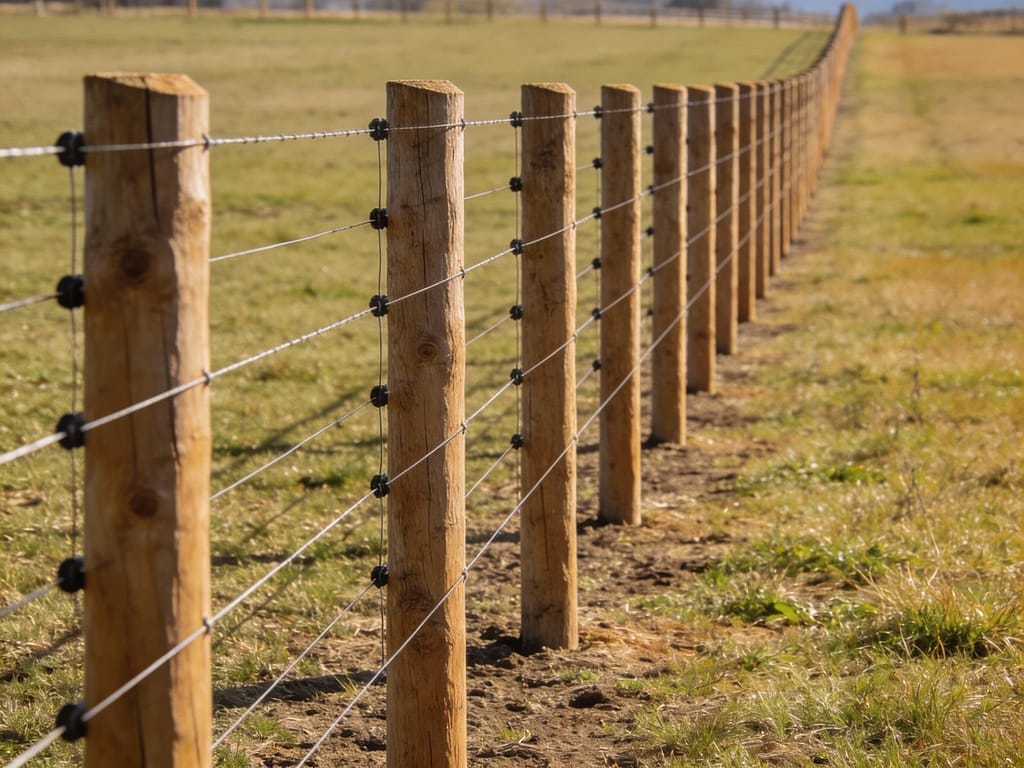
Livestock Fencing

Livestock Fencing Guides for Every Farm Situation

Whether you’re fencing cattle, goats, horses, sheep, pigs, or poultry, choosing the right livestock fencing system requires understanding animal behavior, safety requirements, and containment strategies. This comprehensive resource center provides specialized guides for every livestock type, covering predator control, escape prevention, cost management, and fencing solutions for mixed herds, small farms, and young animals.

Fencing by Livestock Type

Each livestock species has unique fencing requirements based on size, behavior, strength, and escape tendencies. Select your animal type below to access specialized containment guides.

Cattle Fencing

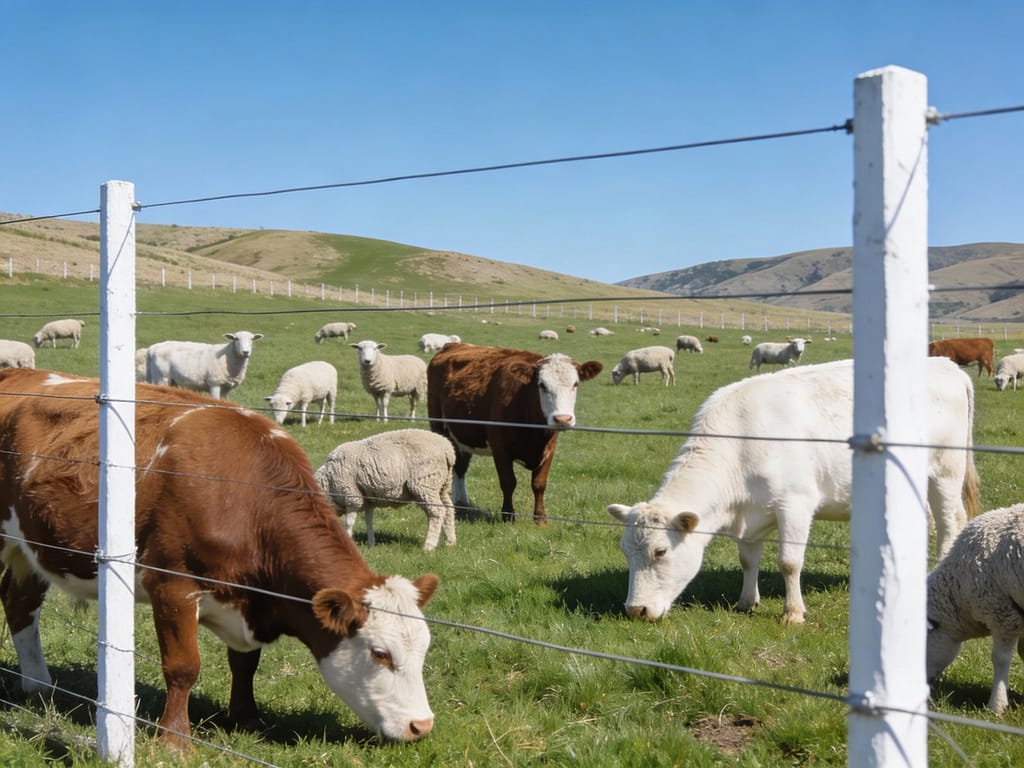
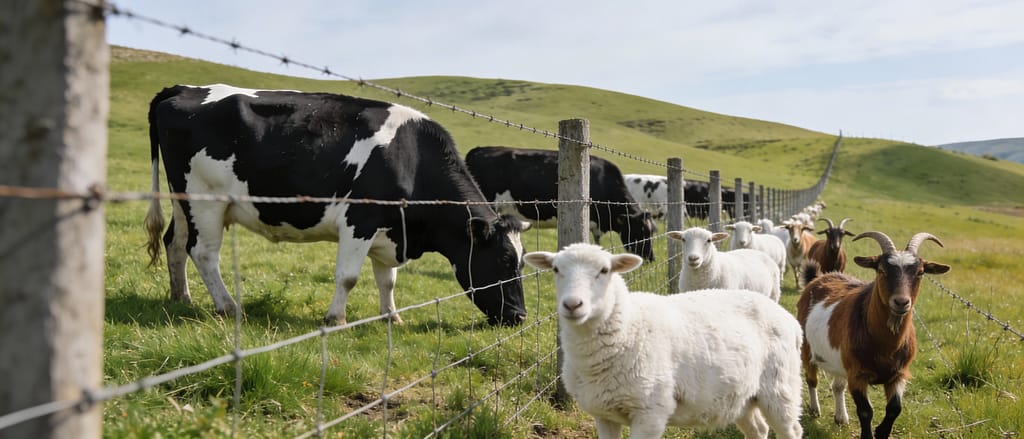
Cattle require strong, visible fencing systems that can withstand significant pressure and weight. Cattle Fencing Guide covers best fencing for cattle, proper cattle fence height, and comparisons between electric fencing for cattle versus traditional wire options. Proper post spacing and strand configuration prevent breakouts while ensuring herd safety.

Goat Fencing

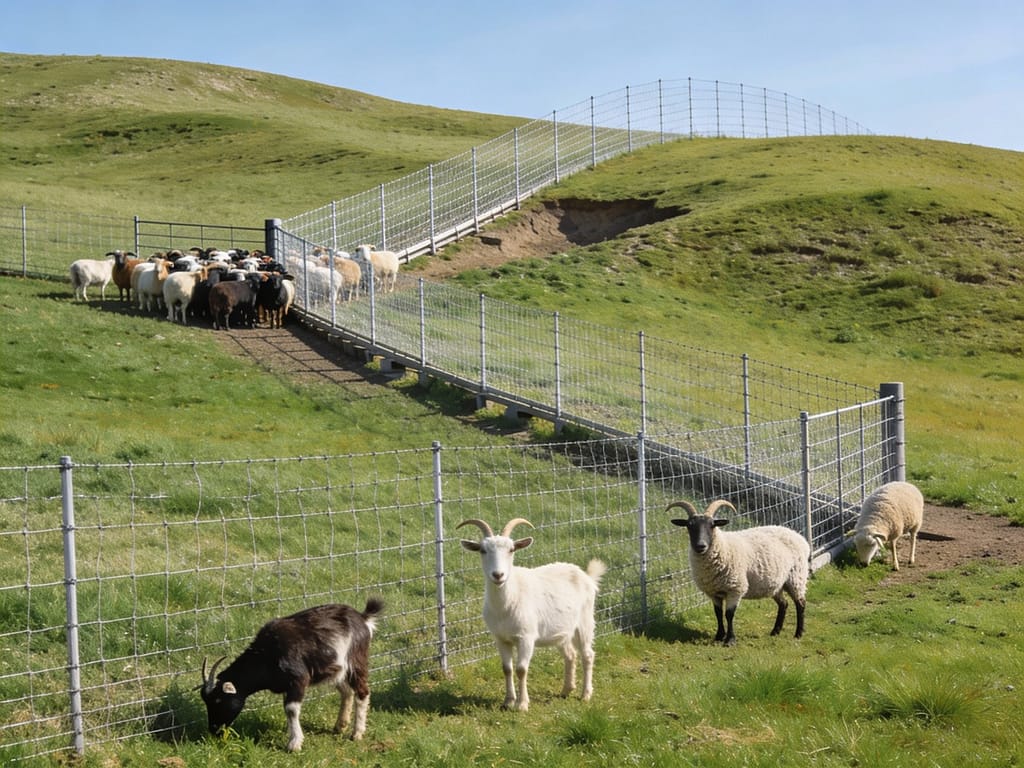
Goats are notorious escape artists requiring specialized containment with tight wire spacing and adequate height. Our Goat Fencing Guide explains proper goat fence height, compares woven wire vs electric fencing for goats, and provides proven strategies to prevent goats from escaping through climbing, jumping, or squeezing through gaps.

Horse Fencing

Horse fencing prioritizes safety and visibility to prevent injury from entanglement or impact. The Horse Fencing Guide identifies the safest fencing for horses, discusses appropriate horse pasture fencing materials, and explains the serious risks associated with barbed wire dangers for horses.

Sheep Fencing

Sheep require fencing that prevents both escape and predator access while accommodating their flocking behavior. The Sheep Fencing Guide covers recommended sheep fence height, effective predator fencing for sheep strategies, and why woven wire for sheep often outperforms other materials.

Pig / Swine Fencing

Pigs are powerful diggers and pushers that require robust fencing systems with buried reinforcement. Our Pig Fencing Guide provides solutions to stop pigs from rooting under fences, discusses electric fencing for pigs effectiveness, and specifies proper pig fence height for containment.

Poultry / Chicken Fencing

Poultry fencing must prevent both flight escape and predator intrusion from above, below, and through the fence. The Chicken Fencing Guide addresses effective predator fencing for chickens, appropriate chicken run fencing materials, and options for portable fencing for poultry in rotational systems.

Mixed Livestock Fencing

Managing multiple species on the same property requires fencing solutions that accommodate the most restrictive requirements. The Mixed Livestock Fencing Guide explains appropriate fence height for mixed livestock, whether electric fencing for mixed livestock provides sufficient control, and how to effectively divide pastures for mixed livestock grazing rotation.

Small Farm / Hobby Farm Fencing

Small-scale operations need cost-effective fencing that balances functionality with budget constraints. Our Small Farm Fencing Guide covers practical budget fencing for small farms, identifies the safest fencing for children and animals, and compares permanent vs temporary fencing for hobby farm applications.

Young & Baby Livestock Fencing

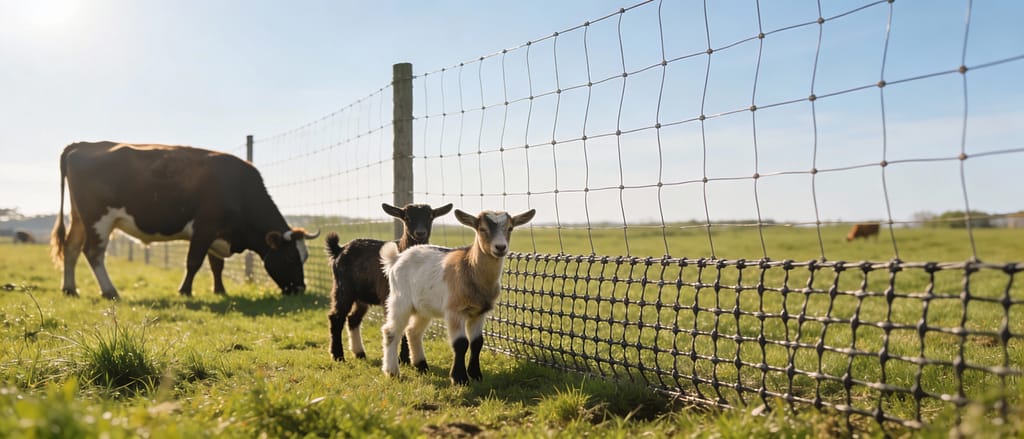
Young animals require tighter wire spacing and enhanced predator protection compared to adult livestock. The Young Livestock Fencing Guide specifies proper fence spacing for baby animals, strategies to protect young livestock from predators, and addresses electric fencing safety for young animals.

How to Choose the Right Livestock Fence

If you are fencing large animals like cattle or horses → Start with Cattle Fencing for strength requirements and wire strand configurations that withstand pressure from heavy livestock.

If you are fencing animals that climb, jump, or escape easily → Review Goat Fencing for tight wire spacing, proper height, and escape-prevention strategies that work for problem animals.

If safety is your top priority → Explore Horse Fencing for injury-prevention materials, visibility requirements, and safe pasture fencing that protects valuable animals.

If predator pressure is high in your area → Visit Wildlife & Predator Fencing for perimeter protection against coyotes, wolves, foxes, bears, and other threats.

If you are on a tight budget → Check Fence Cost & Budgeting for material cost comparisons, long-term value analysis, and strategies to reduce installation expenses.

If your terrain is difficult (slopes, rocks, uneven ground) → Read Terrain & Soil Considerations for post installation techniques, drainage management, and adaptation strategies.

If you manage multiple species with different needs → See Mixed Livestock Fencing for universal solutions that safely contain different animals with one system.

If you need flexible grazing rotation → Learn about Rotational Grazing Systems and Temporary Portable Electric Fencing for cost-effective pasture division.

Perimeter vs Interior Livestock Fencing

Livestock fencing systems serve different functions depending on their location within your property. Perimeter fencing provides boundary security, legal property definition, and primary containment, typically requiring the strongest and most durable materials. Interior fencing enables pasture division, rotational grazing systems, and separation of animals by age, species, or breeding status.

Understanding Perimeter vs Interior Fencing helps you allocate budget appropriately—investing in permanent perimeter systems while using more economical temporary electric fencing for cross fencing layouts that change seasonally. This strategic approach maximizes functionality while controlling costs.

Cost, Safety & Legal Considerations

Livestock fencing represents a significant investment that extends beyond material costs to include installation labor, maintenance, liability, and regulatory compliance. Our Fence Cost & Budgeting guide breaks down total project expenses, while Material Cost Comparison analyzes per-foot costs across barbed wire, woven wire, electric, and specialty materials.

Understanding Fence Liability & Responsibility protects you legally if livestock escape or cause accidents. Fence Safety for Animals addresses injury prevention for different species, while Local Fence Laws & Regulations covers permits, setback requirements, height restrictions, and shared fence responsibilities that vary by jurisdiction.

Common Livestock Fencing Mistakes

Many fencing failures stem from predictable errors during planning, installation, or maintenance. Underestimating animal behavior leads to inadequate height, wire spacing, or strength—particularly problematic with goats, pigs, and young livestock. Poor post spacing creates weak sections that sag under wire tension or animal pressure, compromising containment. Ignoring soil conditions results in unstable posts that lean or heave during freeze-thaw cycles, especially in clay or rocky terrain—addressed in our Terrain & Soil Considerations guide.

Weak grounding for electric fencing significantly reduces shock effectiveness, rendering the system virtually useless in dry or frozen conditions—proper technique is detailed in our Electric Fence Voltage & Grounding section. Poor maintenance allows small problems to escalate into major failures—establishing a regular Fence Inspection & Preventive Maintenance schedule prevents expensive emergency repairs. Incorrect Wire Stretching & Tensioning creates either sagging fences that animals push through or over-tensioned systems that snap unexpectedly.

Related Fencing Topics

Frequently Asked Questions

What is the best fence for livestock? The optimal livestock fence depends on your specific animals—woven wire provides excellent containment for goats and sheep, while high-tensile electric fencing works well for cattle. Horse fencing prioritizes safety with smooth, visible materials, and chicken fencing requires predator protection from ground and air threats.

How tall should a livestock fence be? Fence height requirements vary significantly by species: cattle typically need 48-54 inches, goats require 48-60 inches due to climbing ability, horses need 54-60 inches for safety, sheep require 40-48 inches, pigs need 36-40 inches with buried wire, and chickens need 6-8 feet with overhead protection.

Is electric fencing safe for all animals? Electric fencing is generally safe when properly installed and maintained, though suitability varies by species. It works well for cattle and mature livestock, but young animals may require training. Horses can use electric fencing safely with proper installation, while poultry typically needs physical barriers rather than electric systems.

How much does livestock fencing cost per acre? Fencing costs range from $1-$3 per foot depending on material—barbed wire is most economical at $1-1.50/foot, woven wire costs $2-3/foot, and high-tensile electric systems run $1.50-2.50/foot. For a typical square acre (835 feet perimeter), expect total costs between $835-$2,500. Review our Fence Cost & Budgeting guide for detailed breakdowns including labor and post materials.

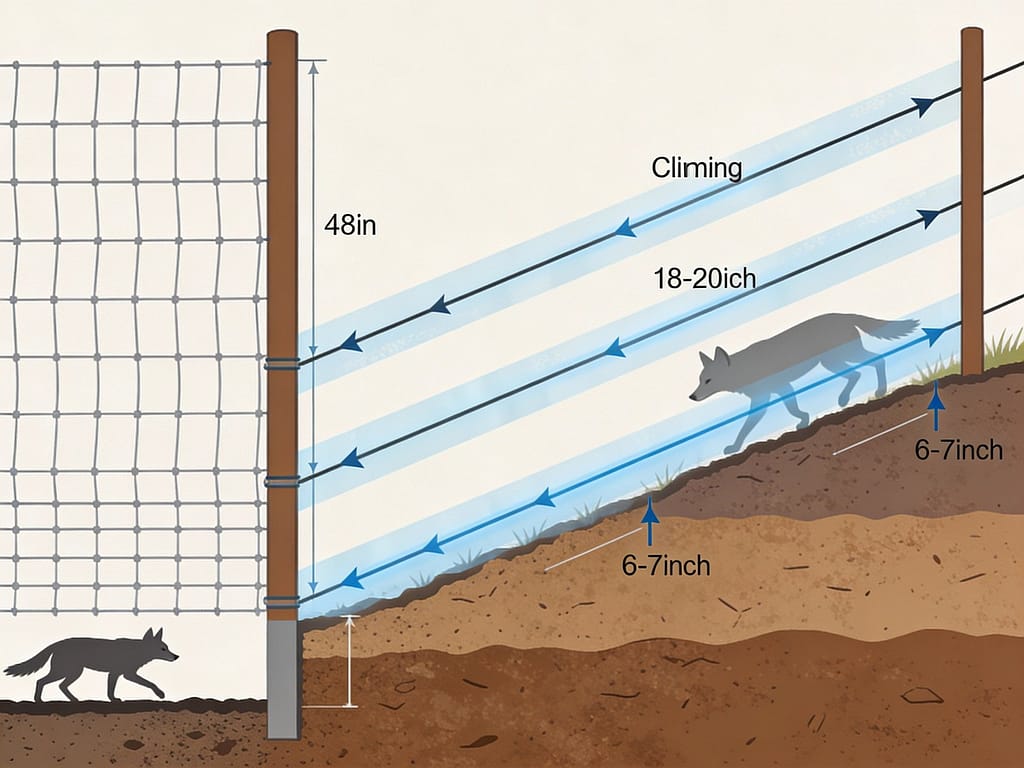
Technical diagram showing fence construction with electric offset strands | How do you fence predators out while containing mixed livestock?

How do you fence predators out while containing mixed livestock?

To fence predators out while containing mixed livestock, use a tight perimeter system that combines woven wire or net fencing with properly powered electric deterrent strands. The fence must prevent digging, climbing, and pushing while remaining safe and visible for different livestock sizes. A layered barrier approach is the most reliable solution. Why This Question […]

How do you fence predators out while containing mixed livestock? Read More »

Mixed Livestock Fencing
Mixed livestock grazing with electric fencing system | Is electric fencing effective for mixed livestock?

Is electric fencing effective for mixed livestock?

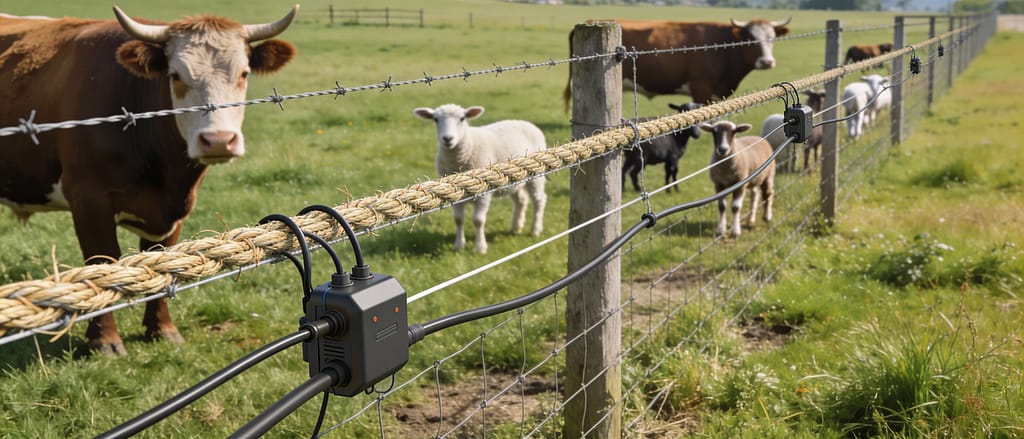
Short Answer Yes, electric fencing can be highly effective for mixed livestock when properly designed and maintained. It works best as a psychological barrier that conditions different animals to respect the fence, rather than relying on physical strength alone. For mixed herds, electric fencing is most effective when voltage, grounding, and wire placement are matched

Is electric fencing effective for mixed livestock? Read More »

Mixed Livestock Fencing
Small livestock near fence showing ground-level escape risks | How do you prevent smaller animals from escaping mixed livestock fences?

How do you prevent smaller animals from escaping mixed livestock fences?

Short Answer Preventing smaller animals from escaping mixed livestock fences requires physical containment at ground level, not just fence height or strength. Tight mesh spacing, proper ground clearance, and secure corners stop small animals from slipping through or under fences. Behavioral deterrents alone are not enough to prevent escapes by smaller livestock. Why This Question

How do you prevent smaller animals from escaping mixed livestock fences? Read More »

Mixed Livestock Fencing
Mixed livestock showing size differences near shared fencing | How do you design fencing for mixed livestock with different sizes?

How do you design fencing for mixed livestock with different sizes?

Short Answer (40–70 words) Designing fencing for mixed livestock of different sizes requires combining physical containment for smaller animals with behavioral control for larger ones. The fence must stop the smallest livestock from escaping while preventing larger animals from leaning or pushing. A layered system achieves safety, durability, and flexibility across species. Why This Question

How do you design fencing for mixed livestock with different sizes? Read More »

Mixed Livestock Fencing
Mixed livestock contained by shared fence system on working farm | Can different livestock share the same fence safely?

Can different livestock share the same fence safely?

Short Answer Yes, different livestock can safely share the same fence when the fence is designed for the smallest and weakest species while controlling pressure from the largest. A properly built shared fence prevents escapes, reduces injuries, and avoids structural damage. Safety depends on fence design, not on livestock compatibility alone. Why This Question Matters

Can different livestock share the same fence safely? Read More »

Mixed Livestock Fencing
Mixed livestock species safely contained behind combined fencing system | What is the best fencing for mixed livestock?

What is the best fencing for mixed livestock?

Short Answer The best fencing for mixed livestock is a combined system using woven wire for physical containment and electric fencing for behavioral control. This approach safely contains animals of different sizes, prevents smaller livestock from escaping, and reduces pressure from larger animals. When designed correctly, it balances safety, flexibility, and long-term cost across multiple

What is the best fencing for mixed livestock? Read More »

Mixed Livestock Fencing
Electric offset wire installation preventing fence contact | How do you prevent horses from leaning or pushing on fences?

How do you prevent horses from leaning or pushing on fences?

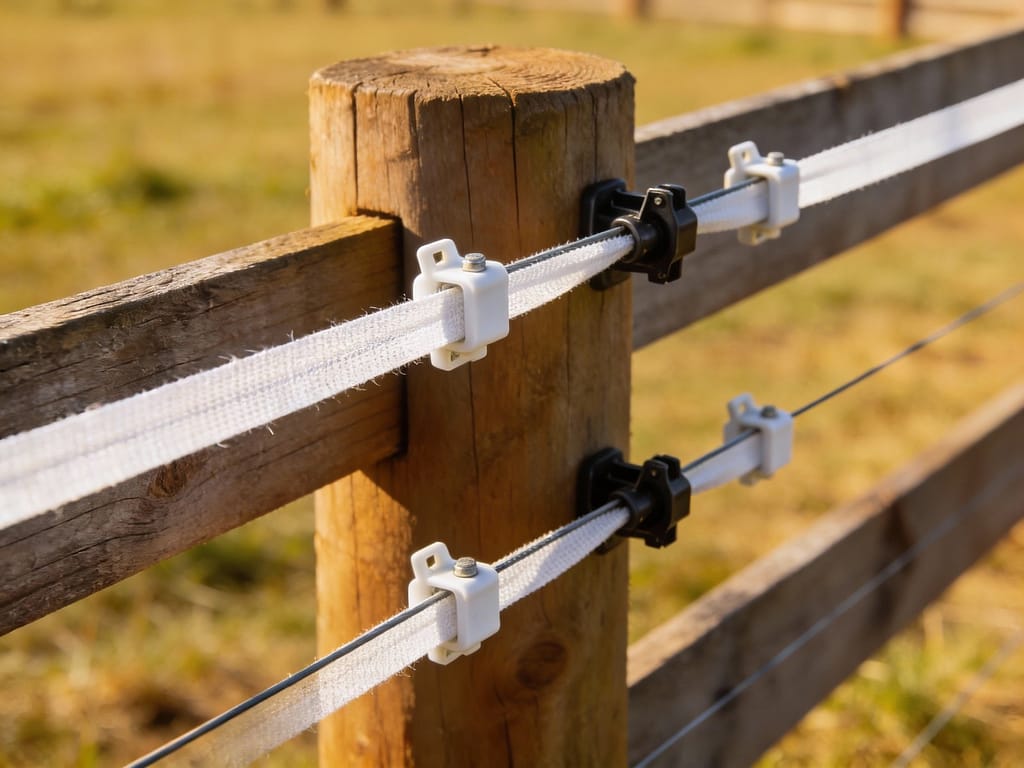
Short Answer The most effective way to prevent horses from leaning or pushing on fences is to use visible fencing combined with electric deterrence. Horses stop testing fences when contact is uncomfortable but harmless. Electric offsets, proper fence height, and consistent tension discourage pressure behavior before physical damage or injury occurs. Why This Question Matters

How do you prevent horses from leaning or pushing on fences? Read More »

Horse Fencing
Cross fencing dividing pastures for grazing management | Do horses need perimeter fencing and cross fencing?

Do horses need perimeter fencing and cross fencing?

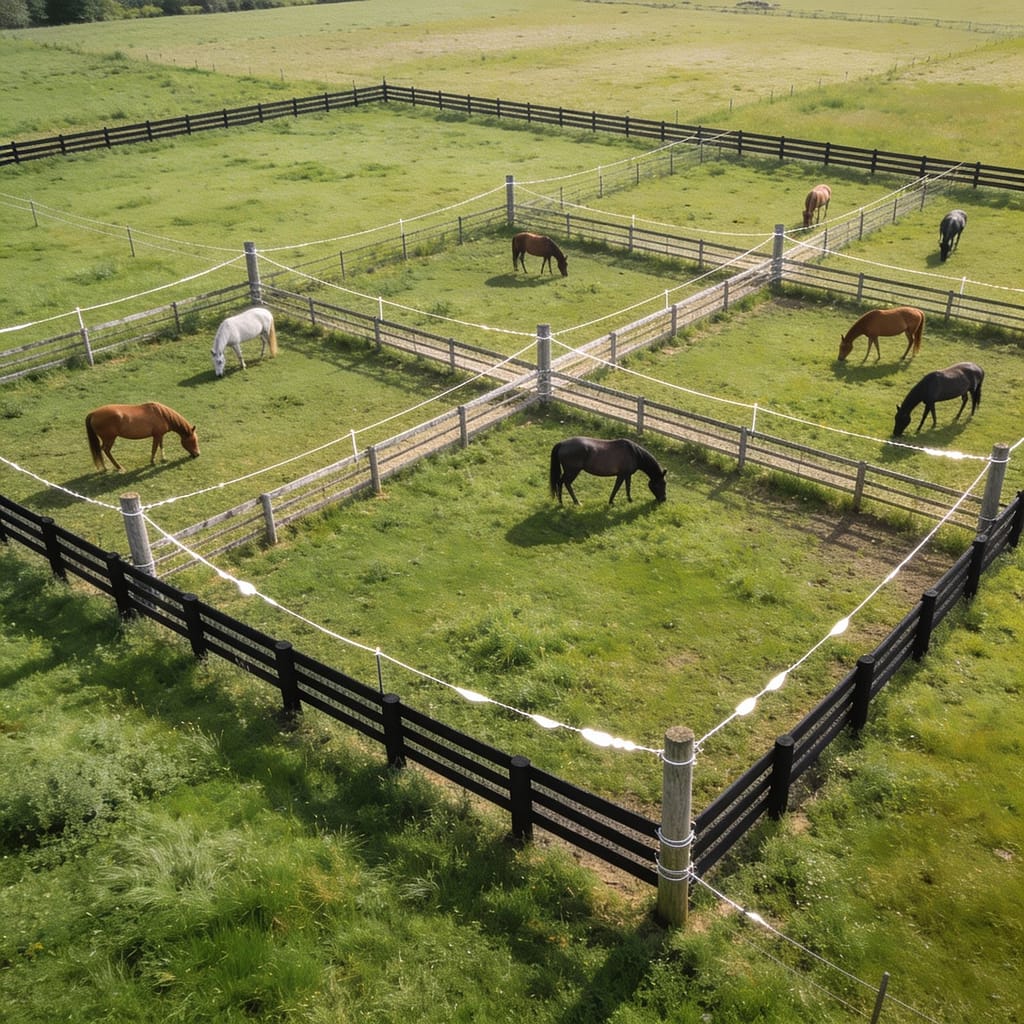
Short Answer Yes, horses typically need both perimeter fencing and cross fencing, but they serve different purposes. Perimeter fencing provides the primary safety and containment boundary, while cross fencing manages movement, grazing, and herd separation inside the property. Using both together improves safety, control, and long-term land management compared to relying on a single fence

Do horses need perimeter fencing and cross fencing? Read More »

Horse Fencing
Horse fence with evenly spaced posts | How far apart should fence posts be for horses?

How far apart should fence posts be for horses?

Short Answer Fence posts for horses are typically spaced 8 to 12 feet apart, depending on fence type and terrain. This spacing provides enough structural support to maintain tension, visibility, and safety without unnecessary material cost. Wider spacing increases sagging and failure risk, while closer spacing improves durability but raises installation cost. Why This Question

How far apart should fence posts be for horses? Read More »

Horse Fencing
Scroll to Top