Short Answer
Proper wire spacing for goat or sheep fencing typically requires 4×4 inch mesh or smaller for woven wire systems. The bottom spacing should not exceed 4 inches to prevent lambs or kids from slipping through. For high-tensile multi-wire systems, the lowest wires should be spaced 4–6 inches apart, with wider spacing allowed higher up.
Why This Question Matters
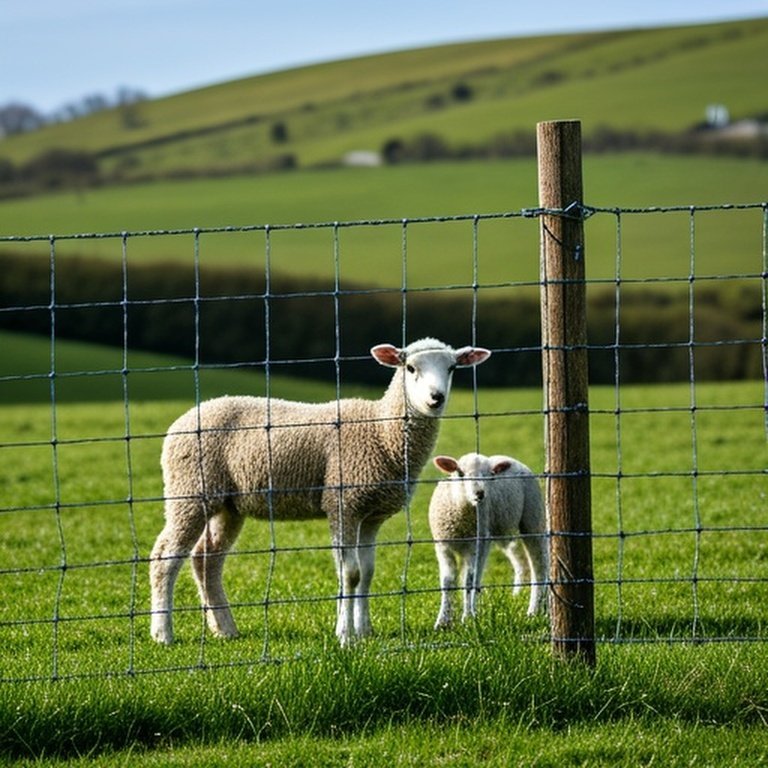
Goats and sheep challenge fencing differently than larger livestock. Sheep are prone to pushing through gaps near the ground, while goats actively test fences by climbing, rearing, or squeezing through openings. Improper wire spacing leads to frequent escapes, predator vulnerability, and chronic fence repairs.
Spacing is more critical than total fence height for small ruminants. A fence that is tall but loosely spaced near the bottom fails quickly. Once animals learn they can pass through or deform fencing, escape behavior becomes habitual. Proper wire spacing prevents that behavioral reinforcement cycle and reduces long-term labor and liability risk.
Key Factors to Consider
- Age and size of animals, especially lambs or kids
- Predator pressure in the surrounding area
- Woven mesh versus high-tensile wire systems
- Terrain irregularities creating ground gaps
- Perimeter fencing versus interior paddock fencing
Detailed Explanation
For goats and sheep, containment success depends primarily on lower wire spacing. The bottom 12–18 inches of fencing is the most critical zone. Lambs and goat kids can pass through surprisingly small gaps. A 4×4 inch woven wire mesh is widely considered the safest general-purpose option because it prevents head and body passage while maintaining structural integrity.
Sheep tend to push forward rather than climb. If lower spacing exceeds 4 inches, lambs may slip under or through the fence. Goats, however, are more agile and exploratory. They may stand upright against fencing, testing vertical tension and larger openings higher up. For goats, consistent spacing and strong tensioning are essential to prevent stretching.
High-tensile multi-wire systems can work effectively if properly configured. The lowest wire should sit approximately 4–6 inches above ground level, with the next wire spaced another 4–6 inches above it. Upper wires may be spaced slightly farther apart because goats and sheep are less likely to challenge height than gaps.
Predator resistance also affects spacing decisions. Coyotes and stray dogs can exploit wider openings. Tighter mesh spacing improves predator deterrence while reducing livestock vulnerability. Ultimately, spacing must account for both internal pressure from livestock and external pressure from predators.
Extended Practical Considerations
How Goat and Sheep Behavior Affects This Choice
Sheep generally test fencing by pushing forward as a group. If one animal finds a weak point near the bottom, others will follow. Consistent lower spacing prevents this “compression breach” effect.
Goats are more independent and agile. They climb, lean, and stretch vertically. Wider spacing in upper sections may encourage rearing and fence deformation. Therefore, maintaining consistent mesh spacing improves long-term containment reliability.
Lambs, Kids, and Mature Animals
Young animals are the primary driver of tighter spacing requirements. Lambs and kids can slip through openings that adult animals cannot. If breeding operations or mixed-age herds are present, spacing must be designed for the smallest animals.
Mature rams or bucks exert more force but are less likely to slip through small gaps. Structural strength matters more than vertical height for containing adults.
Terrain, Visibility, and Pressure Zones
Uneven ground creates lower gaps that effectively increase spacing. Installing fencing tight to the ground or grading problem areas reduces escape points.
High-pressure zones such as gates, feeders, and shared boundaries may require reinforced mesh or additional electric offset wires to maintain integrity over time.
When This Works Well
- Single-species sheep or goat operations
- Woven wire mesh with consistent 4×4 inch spacing
- Properly tensioned high-tensile systems
- Moderate predator exposure
- Regular fence inspection and maintenance
When This Is Not Recommended
- Using large 6×6 inch mesh with lambs or kids present
- High predator regions without additional deterrent measures
- Loose high-tensile systems lacking adequate bottom spacing
- Extremely uneven terrain with persistent ground gaps
- Mixed livestock requiring significantly different spacing needs
Alternatives or Better Options
No-Climb Woven Wire (2×4 Mesh)
For maximum security, especially with goats, 2×4 inch no-climb mesh reduces head entrapment and increases predator resistance compared to standard 4×4 mesh.
Electric Offset Wire Reinforcement
Adding a low electric offset wire discourages pushing and climbing without reducing mesh spacing.
Double Fence Perimeter System
In high-risk areas, installing a secondary interior fence improves predator resistance and reduces pressure on primary fencing.
Cost / Safety / Practical Notes
Tighter mesh spacing increases material cost but significantly reduces escape and predator loss risk. Larger mesh may appear more economical initially, yet frequent escapes and repairs quickly offset savings.
Safety concerns include head entrapment. Mesh openings must be small enough to prevent animals from inserting their heads and becoming stuck. Proper tensioning is equally important; sagging mesh increases effective spacing near the bottom.
From a practical standpoint, woven wire with 4×4 or 2×4 spacing offers the most balanced solution for long-term containment. High-tensile systems require careful planning and consistent inspection to maintain effective spacing over time.
Quick Takeaway
For goats and sheep, wire spacing is more critical than height. Use 4×4 inch mesh or smaller, with bottom spacing no greater than 4 inches. Design for the smallest animals in your herd and reinforce high-pressure areas for long-term reliability.