
Temporary & Portable Electric Fencing Guide
Overview
Temporary and portable electric fencing systems are designed for rotational grazing, seasonal paddocks, strip grazing, and short-term livestock management. Unlike permanent high-tensile systems, portable electric fences prioritize flexibility, rapid setup, and easy relocation.
This Temporary & Portable Electric Fencing Guide explains polywire systems, electric netting, step-in posts, energizer options, grounding considerations, and cost comparisons. It is ideal for cattle producers, sheep and goat operations, poultry setups, and regenerative grazing systems.
This guide focuses specifically on portable and temporary electric fencing—not permanent perimeter installations. For fixed fence systems, see the Permanent Electric Fencing Guide. For complete installation procedures, review the Electric Fence Installation Guide.
YouTube search queries: “how to set up portable electric fence for rotational grazing” or “temporary electric fence setup tutorial polywire netting”
What This Guide Covers
Temporary vs Permanent Electric Fencing
The comparison between temporary and permanent electric fencing reveals fundamental differences in structural design, intended lifespan, and operational flexibility. Temporary systems use lightweight conductors (polywire, polytape, or electric netting) on portable step-in posts, enabling rapid installation and frequent repositioning for rotational grazing or seasonal paddock management.
Permanent systems employ high-tensile steel wire stretched to 200–250 pounds tension on deeply set posts with robust corner bracing, creating installations designed to last 20+ years. Temporary fencing costs less initially and offers management flexibility, while permanent fencing provides superior durability for fixed boundaries. For detailed comparisons and application guidance, see the Permanent Electric Fencing Guide.
Temporary vs Permanent Electric Fencing
Polywire & Polybraid Systems
Polywire and polybraid systems are lightweight conductor options specifically designed for rotational grazing and temporary fence applications. Polywire consists of thin metal conductors twisted with plastic fibers, creating flexible cord that winds easily on portable reels and costs $0.03–$0.08 per foot.
Polybraid (also called polytape or polyrope) features wider, more visible ribbon construction with multiple conductor strands woven through the material. The increased visibility helps livestock recognize boundaries more easily, reducing accidental contact. Polybraid costs more ($0.10–$0.25 per foot) but offers better conductivity and visibility than standard polywire. For conductor comparisons and selection guidance, see the Polywire vs Polybraid guide.
Electric Netting for Sheep & Poultry
Electric netting for sheep and poultry consists of pre-assembled mesh with built-in support posts, creating complete portable enclosures that install in minutes. The continuous mesh provides physical containment combined with electrical deterrence, making it ideal for small livestock and poultry that might slip through strand-based systems.
Standard netting heights range from 35–48 inches for sheep and goats, with specialized poultry netting available in shorter heights. The mesh spacing prevents escapes while horizontal conductor wires deliver shock. For setup instructions and netting selection, see the Electric Netting guide.
Electric Netting for Sheep & Poultry
Step-In Posts & Portable Anchoring
Step-in posts and portable anchoring systems enable rapid fence installation without digging or heavy equipment. These lightweight fiberglass or composite posts feature pointed ends and foot treads that allow installation by stepping or pushing into soil—typical spacing ranges from 8–20 feet depending on terrain and animal pressure.
Built-in insulator clips hold polywire or polytape at predetermined heights. In hard or rocky soil, alternative anchoring methods using screw-in ground anchors or weighted bases may be necessary. For post selection, spacing recommendations, and installation techniques, see the Step-In Post guide.
Step-In Posts & Portable Anchoring
Solar Energizers for Portable Fencing
Solar energizers for portable fencing provide power independence for remote paddocks and rotational grazing systems without electrical service access. These units combine solar panels (typically 5–20 watts) with rechargeable batteries (12-volt deep-cycle) to store power for nighttime and cloudy conditions.
Battery-powered DC energizers without solar panels offer simpler portable solutions but require battery replacement or recharging every 2–6 weeks depending on fence load. For temporary systems with fence lengths under 2 miles, 0.5–3 joule solar or battery units typically provide adequate output. For energizer selection and power source comparisons, see the Electric Fence Chargers & Energizers Guide.
Solar Energizers for Portable Fencing
Wire Spacing for Temporary Systems
Electric fence wire spacing chart provides species-specific recommendations for strand height and configuration in temporary systems. Cattle typically perform well with 1–2 polywire or polytape strands at 30–40 inches height, relying primarily on psychological deterrence rather than multiple physical barriers.
Sheep and goats require closer spacing—3–5 strands at 8–12 inch intervals or electric netting—due to smaller body size and tendency to test fence gaps. Proper spacing ensures animals respect boundaries while minimizing material costs and setup time. For detailed spacing charts and configuration recommendations, see the Wire Spacing Chart.
Wire Spacing for Temporary Systems
Grounding for Portable Setups
Grounding for portable setups follows the same electrical principles as permanent installations—adequate grounding is essential for proper shock delivery regardless of system type. Small portable setups may function with 1–2 ground rods, but proper grounding requires minimum three 3-foot rods (or two 6-foot rods) spaced 10 feet apart for reliable performance.
Portable ground rods must be driven into moist soil and connected to the energizer’s ground terminal with insulated wire. Inadequate grounding causes weak shocks and livestock escapes even with powerful energizers. For portable grounding techniques and testing procedures, see the Grounding System Guide.
Rotational Grazing Layout Planning
Rotational grazing layout planning determines paddock size, subdivision quantity, and fence routing to optimize forage utilization and animal performance. Cell design considerations include stocking density, forage production rates, water access points, and grazing duration targets.
Strip grazing using portable fencing moved daily or multiple times per day maximizes forage efficiency but requires more labor. Paddock subdivision systems with semi-permanent lanes and temporary cross-fencing balance management flexibility with reduced daily labor. For layout strategies and cell sizing calculators, see the Rotational Grazing Setup guide.
Rotational Grazing Layout Planning
Portable Fence Cost Comparison
Portable fence cost per foot typically ranges from $0.25–$1.00 for polywire systems and $2.00–$4.00 for electric netting, significantly less than permanent electric fencing ($1.50–$4.00 per foot) or woven wire ($3.00–$8.00 per foot).
Complete portable fence kits including conductor, posts, energizer, and accessories for ¼-mile paddock typically cost $200–$600. However, shorter lifespan (3–7 years for polywire versus 20+ years for permanent systems) affects total ownership costs. For comprehensive cost analysis and budgeting tools, see the Fence Cost & Budgeting Guide.
Portable Fence Cost Comparison
Troubleshooting Portable Electric Fence Issues
Troubleshooting portable electric fence issues focuses on common voltage loss causes in temporary setups including inadequate grounding (most frequent problem), vegetation contact with low-hanging conductors, weak connections at reels or insulators, undersized energizers for total fence length, and depleted batteries in solar or DC units.
Daily voltage testing during active grazing helps identify problems before livestock discover weak sections. Systematic checking of connections, clearing vegetation contact, and testing ground system performance resolves most issues. For diagnostic procedures and repair techniques, see the Electric Fence Maintenance & Troubleshooting Guide.
Troubleshooting Portable Fence Issues
Common Decision Scenarios
If You Need Low-Cost Subdivision Fencing
Portable electric fencing costs significantly less than woven wire field fence or permanent electric systems for temporary paddock subdivision. Polywire systems at $0.25–$1.00 per foot provide economical rotational grazing infrastructure.
The reduced material and installation costs make portable fencing ideal for operations testing grazing strategies or managing seasonal pastures. For cost comparisons and budget planning, see the Fence Cost & Budgeting guide.
If You Practice Rotational Grazing
Portable systems allow rapid paddock adjustments to match forage availability, weather conditions, and livestock needs. Single or multi-strand polywire fencing installs in 30–60 minutes per ¼-mile section, enabling flexible grazing management.
The ability to easily relocate fencing adapts to changing pasture conditions throughout the season. For grazing system design and fence layout strategies, see the Rotational Grazing Setup guide.
If Predator Pressure Is High
Electric netting may provide better containment and predator deterrence than strand-based polywire systems for vulnerable small livestock. The continuous mesh creates physical barriers while multiple horizontal conductors deliver shock at various heights.
Higher voltage (5,000–7,000 volts) and proper grounding are essential for effective predator deterrence. For predator-specific strategies and system combinations, see the Wildlife & Predator Fencing Guide.
If Terrain Is Uneven
Flexible polywire adapts better to uneven terrain than rigid fencing systems like woven wire or wood boards. Lightweight conductors follow ground contours without requiring leveling or stepped installations.
Step-in posts install easily even on slopes and rocky ground where digging permanent post holes would be challenging. For terrain-specific installation techniques, see the Fence Planning Basics guide.
If You Want Minimal Infrastructure
Portable systems avoid heavy corner bracing and deep post setting required by permanent installations. The lightweight design allows one person to install hundreds of feet of fencing in hours without specialized tools or equipment.
This minimal infrastructure approach works well for rental properties, seasonal pastures, or operations planning future layout changes. For infrastructure comparisons, see the Permanent Electric Fencing Guide.
Key Design & Planning Considerations
Fence Height & Spacing
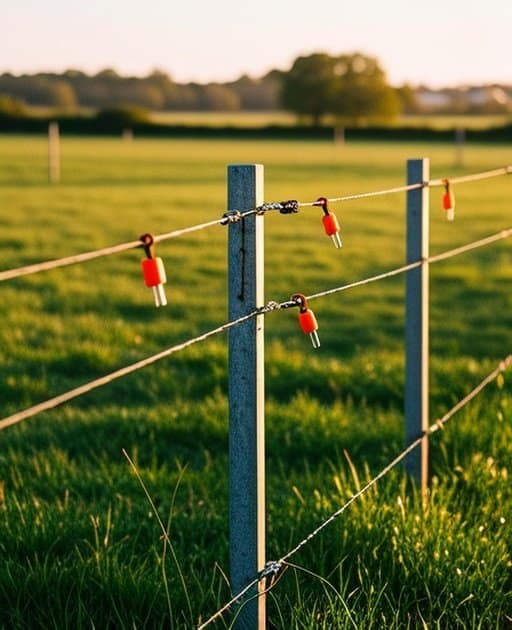
Temporary systems require proper strand spacing to ensure livestock respect the fence without physical containment barriers. Cattle typically perform well with 1–2 strands at 30–40 inches height, while sheep and goats require closer spacing—3–5 strands at 8–12 inch intervals or electric netting.
Bottom wire height affects containment effectiveness—typically 10–15 inches above ground for cattle and 6–10 inches for smaller livestock. Lower heights reduce escape risks but increase vegetation contact probability.
Safety Factors
Portable electric fences operate on high-voltage pulses that deter animals without causing harm when properly grounded and insulated. Modern energizers deliver brief shocks (0.0003 seconds) designed to startle rather than injure.
Proper setup includes adequate grounding, secure connections at all junction points, and maintaining conductors at appropriate heights to prevent accidental human contact. For safety standards and regulations, see the Local Fence Laws & Regulations guide.
Cost & Maintenance
Temporary systems have lower upfront material costs ($0.25–$4.00 per foot) but require more frequent monitoring, voltage testing, and adjustment than permanent installations. Daily checks ensure adequate voltage and proper conductor positioning.
Polywire and polytape typically last 3–7 years depending on UV exposure and handling, requiring periodic replacement. For lifecycle cost analysis and maintenance budgeting, see the Fence Cost & Budgeting guide.
Installation Complexity
Setup is fast and requires minimal tools—step-in posts install without digging, and lightweight conductors wind easily on portable reels. However, energizer selection, grounding, and voltage testing remain critical for effectiveness.
One person can typically install ¼-mile of polywire fencing in 30–60 minutes with practice. For installation procedures and setup tips, see the Electric Fence Installation guide.
Legal & Boundary Considerations
Always verify electric fence placement regulations near public areas, roads, or recreational trails. Some jurisdictions require warning signage or restrict electric fencing in certain zones regardless of whether installations are permanent or temporary.
Portable fencing near property boundaries should maintain appropriate setbacks and not cross onto neighboring properties without permission. For legal planning guidance, see the Local Fence Laws & Regulations guide.
Related Fence Systems
- Permanent Electric Fencing Guide – Fixed installation systems
- Electric Fence Installation Guide – Complete installation procedures
- Electric Fence Chargers & Energizers Guide – Power system selection
- Electric Fence Maintenance & Troubleshooting Guide – Ongoing care
- High Tensile Wire Fencing Guide – Permanent wire systems
- Woven Wire / Field Fence Guide – Physical containment alternative
Frequently Asked Questions
Is portable electric fencing strong enough for cattle?
Yes, when voltage is maintained properly at 3,000+ volts—cattle respond well to psychological deterrence from properly functioning polywire or polytape systems.
How often should portable fences be checked?
Daily voltage checks are recommended during active grazing to ensure adequate shock delivery—use the maintenance procedures to identify issues quickly.
Can electric netting stop predators?
Electric netting can deter many predators when voltage remains above 5,000 volts—combine with proper grounding for best predator deterrence.
How many ground rods are needed?
Small portable setups still require minimum 1–2 ground rods for basic function, but proper grounding with three 3-foot rods ensures reliable performance.
Is temporary electric fencing cheaper than woven wire?
Yes, material costs are typically 50–75% lower—polywire systems cost $0.25–$1.00 per foot versus $3.00–$8.00 for woven wire.
Final Recommendations
Temporary and portable electric fencing systems are ideal for rotational grazing, seasonal paddocks, and flexible livestock management. They offer lower upfront costs, rapid setup, and easy relocation compared to permanent installations.
However, portable systems require regular voltage monitoring through daily checks and vegetation control to maintain effectiveness. For long-term perimeter fencing, permanent high-tensile electric systems may provide better durability and lower lifecycle costs.
Choose your system based on grazing strategy, livestock type, terrain, and long-term management goals. Use the linked guides above to plan costs, select conductors, size energizers, design grounding systems, and implement grazing layouts for optimal portable electric fence performance.